Random thoughts

f44d716567a034cbcb2a11b5063e1afc--funny-shit-funny-stuff.jpg
 
why demonic non humans exist in this era
actng like animals,i cant comprehend
virtually endorsed by those voting it in,fortunanately only for a period,but that period enough to do damage, because it cam
- dont mind saying

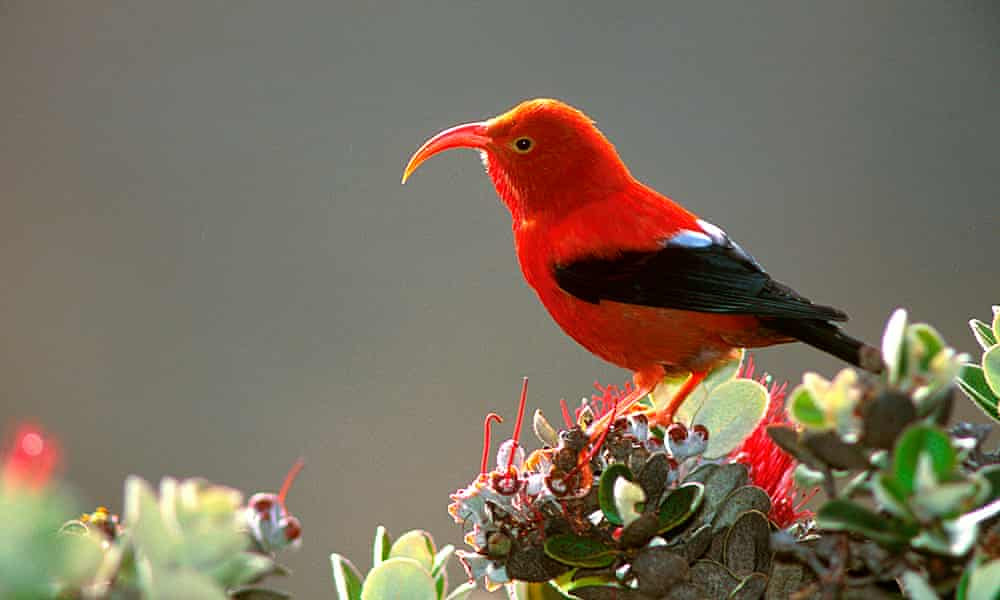
Revealed / Trump administration sabotages major conservation effort, defying Congress
Federal support to research centers cut off as scientists fear years of successful work will go ‘down the drain’


The not-so-good news


Revealed / Trump administration sabotages major conservation effort, defying Congress
Federal support to research centers cut off as scientists fear years of successful work will go ‘down the drain’


The good news


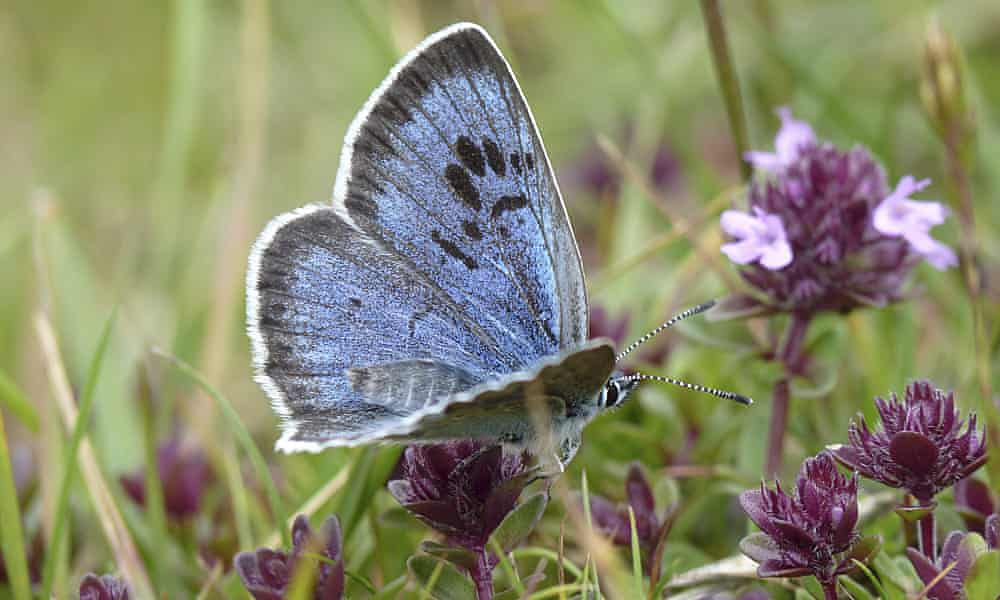
Flying numbers / Rare UK butterflies enjoy best year since monitoring began
Hot summer of 2018 boosted large blue, and black hairstreak, but small tortoiseshell declined
 
  • Like
Reactions: Nudistpig
like clever sensible
unlike the it,commander of deniers/everything Trump

How Scientists Are Using Real-Time Data to Help Fishermen Avoid Bycatch
Using a strategy called dynamic ocean management, researchers are creating tools to forecast where fish will be—and where endangered species won’t be

image: https://thumbs-prod.si-cdn.com/ENHE...-43e5-9439-a177111fbc7b/loggerhead_turtle.jpg

loggerhead_turtle.jpg

Scientists and ocean advocates are hoping to find a way to both protect sea turtles and other threatened species and help fishermen make a living. (pniesen/iStock)
By Rachel Kaufman
SMITHSONIAN.COM
APRIL 12, 2019 11:05AM
accidentally caught and killed over 100 leatherback and loggerhead sea turtles, and injured many more.

In 2001, the federal government established the Pacific Leatherback Conservation Area, a 250,000-square-mile region off the coast of California that is off-limits to fishing boats from August through November.

Since then, the number of turtles killed as bycatch has plummeted, but a handful of animals still die from being entangled in fishing nets each year—too many, environmental advocates say. And at the same time, the closure of the giant oceanic region means the once-$15 million swordfish industry has become a $2 million industry, and the number of boats plying the waters has decreased significantly.

Scientists and ocean advocates are hoping to find a way to both protect sea turtles and other threatened species and help fishermen make a living. To this end, many are looking at dynamic ocean management, a strategy that uses advances in real-time data collection to help fishing vessels meet fish where they are—and avoid all other bycatch.

image: https://thumbs-prod.si-cdn.com/g7cg...64-4eec-999a-276a045d38d1/gillnet_fishing.jpg

gillnet_fishing.jpg

The number of turtles killed as bycatch has plummeted, but a handful of animals still die from being entangled in gillnets off the coast of California each year. (Craig Heberer)
 
The first paper to suggest that pelagic fish—the fish that live in the open ocean and are often impressively migratory—should be guarded with fluid, ever-changing zones of protection, as opposed to static ones, came out in 2000. Larry Crowder, professor of marine ecology and conservation at Hopkins Marine Station, part of Stanford University, remembers reading it and thinking, “Cool idea, but it’ll never work.” In the year 2000, scientists didn’t have the computer capacity to cheaply test statistical models or process satellite data with any semblance of speed. Nor did they have enough data tracking fish or satellite data on ocean conditions. That’s all changed.

Now scientists can download oceans of satellite data in minutes, and the development of pop-up satellite archival tags, which researchers attach to fish to track their movements, has allowed the study of large marine animals like tuna, swordfish and sea turtles. Combined, it’s a technological revolution that’s allowing scientists and fishery managers unprecedented abilities to forecast where fish will be—and where bycatch won’t be.

In a nutshell, it works this way: Scientists first collect data on where a fish or other “target species” can be found, by tagging the species, collecting reports from fishing boats, or other tracking methods. Then they compare that data to weather conditions, the time of year, and any other data that can be sensed remotely. “If there's a good statistical relationship …that matches up with where these animals are likely to be, you can use remotely sensed oceanographic data to forecast where they are likely to be,” Crowder says.

For example, California sea lions prefer cooler water near the coast, while leatherback turtles congregate near what’s called an upwelling front, where two different water masses converge and bring nutrients closer to the surface. Both sea lions and leatherbacks are harmed when they’re caught as bycatch by fishing boats targeting swordfish, which hang out all along California.

"We can't protect these animals from humans by using [static] protected areas," Crowder adds. "If you closed the areas where loggerhead turtles are known to go, you'd close the entire Pacific Ocean." But if you use weather data and statistical models to show that loggerheads prefer certain water temperatures, you can just close regions of the ocean that are those temperatures, changing it day by day.


Crowder and colleagues at the National Oceanic and Atmospheric Administration used their data collected over more than two decades to develop a tool called EcoCast, which shows fishermen a daily map where there are more swordfish than bycatch. Statistical modeling showed that if fishers had used EcoCast during the 2012 and 2015 fishing seasons (years chosen for their averageness and exceptional warmness, respectively), they could have fished in at least 125,000 more square miles than were open to them, without significant risk of hurting turtles. Getting swordfishermen to actually use the tool is another question—so far, its data is advisory-only. But it’s in nobody’s interest to force the fishery to close because of too many interactions with endangered species, Crowder says.

image: https://thumbs-prod.si-cdn.com/vbI_...-a4b8-4cf3-a6e9-5abec90e0f55/ecocast_copy.png

ecocast_copy.png

EcoCast map for April 11, 2019 (EcoCast)
Similar tools are being developed to protect other species. Researchers at the University of Delaware have created a mapping and modeling tool to help fishermen targeting smaller commercial fish like croaker and bass avoid the endangered Atlantic sturgeon—a win-win, since the massive fish, which average 300 pounds, would destroy nets built for smaller prey. In the Pacific Northwest, the ocean nonprofit Oceana is working on a system that would temporarily close a Dungeness crab fishery—or ban certain types of gear—based on reports of whale movements from whale watching fleets.

Some say dynamic ocean management isn't a cure-all, however. Geoff Shester, California campaign director and senior scientist with Oceana, says that the real problem with the Pacific swordfish fishery is the gear fishers use. In that fishery, fishing boats set mile-long nets overnight. Those "drift gillnets" float freely in the ocean until fishing vessels come back to retrieve the nets the next morning. That’s "too unselective," Shester says. Some estimates say that fishermen throw away 60 percent of what they catch in a driftnet, Shester adds. Were fishers to use a predictive model to help avoid sea turtles, "now we just pushed [them] into higher bycatch [levels] for other rare species we care about," he says. "There's nowhere in the California current that's not a hotspot for something." (Crowder says his team's work "addressed the main species of concern," although he agrees that animals are "only truly safe from bycatch if you eliminate the fishery.")

Elsewhere, dynamic ocean management tactics are having more success. NOAA's Pacific Islands fisheries center has been providing a daily map, called TurtleWatch, to help the swordfish industry avoid turtles north of the Hawaiian Islands for about a decade. The data NOAA collected found that half of all turtle "interactions"—when a turtle is snagged on a fishing line or caught in a net—occur in a narrow band of water where the temperature is between 63.5 and 65.5 degrees Fahrenheit. NOAA publishes the map roughly every day as a guideline to help fishing vessels know where to direct their boats.

"This is a really unique product that helps fishers avoid turtle bycatch," says Todd Jones, lead scientist on NOAA Fisheries' Marine Turtle Biology & Assessment program. TurtleWatch, combined with new regulations on types of fishing gear, helped reduce turtle interactions in a 400,000-square-nautical-mile area from 400 a year to 10.

But TurtleWatch is partially a victim of its own success. As turtle interactions have gone downhave stopped worrying about the likelihood of catching a turtle—and so have been fishing in the temperature bands where turtles are most likely. That means that the fishery has hit its hard cap of turtle interactions two years in a row—when that happens, the fishery is immediately closed for the rest of the year.

image: https://thumbs-prod.si-cdn.com/7f1V...9f40-78c1-448d-a015-5af6c9c426e4/sailfish.jpg

sailfish.jpg

Crowder's team attaches a tag to a sailfish off the coast of Costa Rica, in the early stages of their next dynamic ocean management project. (Robbie Schallert)
Back in California, it's not satellite imagery that's going to end up saving turtles, at least according to Shester—it's a ban on drift gillnets that goes into full effect in 2023, pushed in large part by Oceana. (Then-Gov. Jerry Brown signed the measure into law on September 27, 2018.)

But this ban, too, is a form of dynamic ocean management. Shester says the state’s drift gill net fishery is expected to transition to a type of gear called deepset buoy gear, where a baited hook is dropped over a thousand feet into the ocean.

"During the day, swordfish are swimming at [that] depth, largely by themselves," Shester says. "So basically deepset buoy gear is a dynamic closure." If fishing vessels were required to use gear that plunged 1,200 feet below the sea, that's equivalent, he says, to a dynamic closure of the sea surface. "And that's based on the movements of these animals."

Shester says you can think about dynamic ocean management as a spectrum of options. You can have indiscriminate fishing gear, used at a specific time, place or season, when only one species of fish is around. Or you can have very targeted gear used at indiscriminate times. "We have to stop thinking in two dimensions when we talk about protected areas. You can get into three dimensions, because depth is such an important factor. It's time, it's area, and it's depth."


Read more: How Scientists Are Using Real-Time Data to Help Fishermen Avoid Bycatch | Innovation | Smithsonian


 
and i thought Whales Sharks and sealife were the main ones affected


header-polar-bear-plastic.jpg


Feeding at a landfill is full of immediate threats for polar bears—like one in Churchill, Manitoba, that ate a sharp tin can. But researchers are finding the accumulation of plastic in polar bears’ stomachs can cause problems, too. Photo by Eric Baccega/NPL/Minden Pictures
Polar Bears’ Plastic Diets Are a Growing Problem
In the Arctic, polar bears feeding in landfills get an unhealthy serving of stomach-blocking plastic bags.


header-watching-white-bear.jpg


Polar bears summering near Kaktovik, Alaska, scavenge on the bone pile, the remains of bowhead whales hunted by indigenous whalers. Photo by Doug Allan/Minden Pictures
The Bounty of the Bone Pile

Butchered whales lure polar bears and tourists to a coastal

map-watching-white-bear.png


ahem


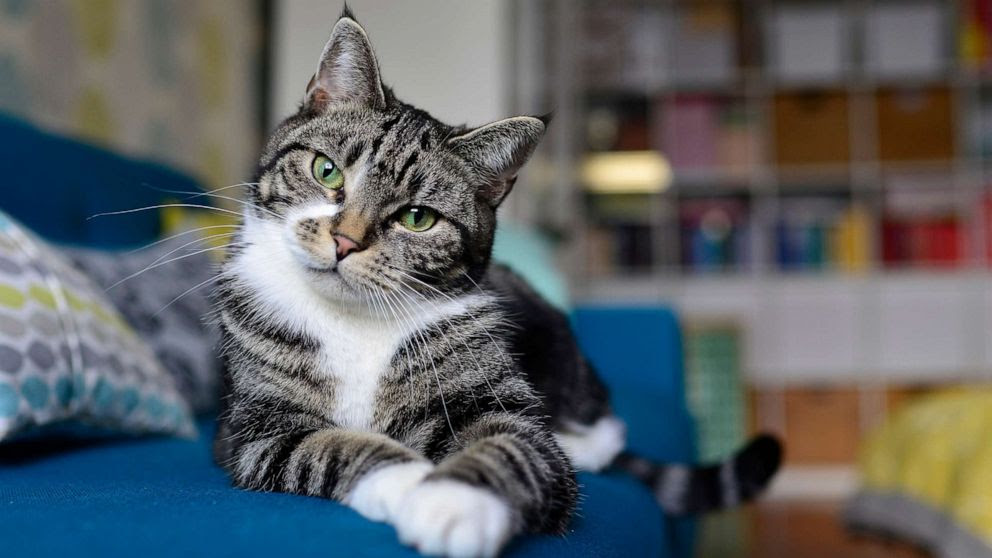
7. Cats know their own names.
Japanese researchers found that felines can discriminate between similar sounding human words — if they’re listening to you at all.

3YN1UabtXJf8GCuws0cNBknJpugS9VwileJ-VcwcO5piq4rGBqjcsqxNGcGTW4OrYZ6xyejymG_9EgC8nzSKLrMnr1LPv2we3-bxgbweThNa9u8KRS6vOrKgqUAv=s0-d-e1-ft
AWW! I KNEW Bob knew his name!
Three cats and they all turns their heads when I say their names. It’s not like they do anything, but they look at me, like “What? As if...”

I love Bob. :heart:
 
  • Like
Reactions: Enid and rbkwp
smile
do American cats look at you quizzically and meoow 'wassup'

ironcally i said to my landlady i would take ether her failing health mums cat or dog
but
a few hours later rescinded my offer, bcause i dont think i can handle the responsibility of animal ownership these days
affection notwithstanding , its now placed asde i am afriad
have learnt cruelty with all the bad things happening and canr shake it grrrr

Click to expand...

AWW! I KNEW Bob knew his name!
we're all one consciousness experiencing itself subjectively, there's no such thing as death, life is a dream, & we are the imagination of ourselves
 
  • Like
Reactions: LaFemme
please dont try and tell me these two articles are of no interest to some
ps
save our planet, whats left of it
for future generations, not us learned selfish blighters/ some of us


1
NEED TO KNOW
Special Briefing: The New Frontiers of Climate Change
A recent climate change report sets serious deadlines for humanity to save the planet from catastrophe. But in every corner of the world, people are doing their part.

The bad news is that a recent report from the Intergovernmental Panel on Climate Change rocked the world with a dire, science-backed pronouncement: Earth has already warmed to a worrying extent, and to prevent further, catastrophic planetary shifts humanity’s carbon emissions have to be cut in half in the next 12 years. While 100 companies cause 71 percent of global emissions — and real change has to start there — smaller players are already making positive changes. OZY’s series The New Frontiers of Climate Change focuses on those people and teams around the world who are coming up with ways to fight climate change and to protect us from its effects.

READ MORE


2
FAST FORWARD
Danish Wine, Anyone? How Climate Change Is Helping Farmers
A new breed of Scandinavian crops – from maize to grapes – is thriving thanks to global warming.

Fredrik Andersson’s family has run a farm in Arboga, Sweden, for three generations. It’s only in recent years that the seven-decade-old farm, now 450 hectares, has had to face up to climate change–induced extreme weather, he says. But for the farm — about 100 miles west of Stockholm — that produces wheat, rapeseed, oats and malt barley, in addition to perennial grasses such as timothy, the change isn’t all bad.

READ MORE
 
thought tjey only played up in Aus

Cassowary attack: giant bird kills owner in Florida after he fell


Bird native to Australia and Papua New Guinea likely killed breeder with its long claws

Associated Press

Sun 14 Apr 2019 02.11 BSTLast modified on Sun 14 Apr 201902.13 BST

A cassowary is a large flightless bird native to Australia and Papua New Guinea. One such bird killed its owner in Florida. Photograph: Wilson Ring/AP
A cassowary – a large, flightless bird native to Australia and Papua New Guinea – has killed its Florida owner when it attacked him after he fell.

The fire rescue department in Alachua county told the Gainesville Sun newspaper the cassowary killed the man on Friday on his property near Gainesville, in the north of the state, likely using its long claws. The victim, whose name was not released, was apparently breeding the birds, state wildlife officials said.

“It looks like it was accidental. My understanding is that the gentleman was in the vicinity of the bird and at some point fell. When he fell, he was attacked,” the deputy chief, Jeff Taylor, told the newspaper.

Cassowaries are similar to emus. They can be up to 2 meters (6ft) tall and weigh up to 60kg (130lb), with black body feathers and bright blue heads and necks.

FacebookTwitterPinterest
A cassowary, one of the world’s most dangerous birds, in attack mode
The San Diego zoo’s website calls cassowaries the world’s most dangerous bird with a 10cm dagger-like claw on each foot.

“The cassowary can slice open any predator or potential threat with a single swift kick. Powerful legs help the cassowary run up to 31 miles per hour (50km/h) through the dense forest underbrush,” the website says.

Cassowaries are not raised for food in the US, but are sought after by collectors.

It is not clear what happened to the bird.


Topics
 
Scientists Spot Beautiful Optical Illusion at Bottom of the Sea
More than 6,000 feet under the surface of the ocean, the extreme conditions can play tricks on your eyes

FGj8kh4_UaWQkRq27pxf7ZC8oGK2Z2mcVRuJDXaNQ_CxxVeEP1Fk6pvJuWLZChu5Oj4dgCeOhJ0dK8GMbuYsSd8GMM2484oltOTn88EuyzDZQq6xlzn0MZxHaObR8h1TD9STwAN9XStUV89Sun4kSC9vAh4F9O-FkjPJP8EfCN9DV4ru87f4ZClZJ6evdFgVlpUrrFYJlf7W3ExSOAj7FmokTA6ijZ0ffVgRQrCDTUz0K4zxYkWdgNFh21rgm-qSs6FXCOXfq6TaEz4pHnrNO9HUci9dVzVSA_JOXw=s0-d-e1-ft


To view this content we will need your consent to set third party cookies.
For more detailed information, see our cookies page.


Read more: Scientists Spot Beautiful Optical Illusion at Bottom of the Sea | Science | Smithsonian
Give the gift of Smithsonian magazine for only $12! Give the gift of Smithsonian