Random thoughts

a BEER and RED MEAT exccessive ok
- i said

F'ck those who say we should eat less

yeah
youd encurage us to eat corporate proccessed crap huh
money hungry devils

well
admittedly a sausage IS PROCESSED huh

VWs dodgy as anyway huh

VOLKSWAGEN'S BEST-SELLING PRODUCT IS A ... SAUSAGE


150026_gettyimages876335002.jpg


Everybody, soon or late, sits down to a banquet of consequences.

Volkswagen's Best-Selling Product Is a ... Sausage
 
not good
love pork
hasent hit NZ yet, but
realistically,only time i geuss, bugger


Email
Pigs are being culled and pork prices are rising as African swine fever continues to spread
By Ellen Duffy
Updated October 04, 2019 15:56:54

PHOTO: Authorities are closely watching Australia's north with African swine fever reaching Timor Leste. (Reuters: Russell Boyce)

RELATED STORY: 'One quarter of the world's pigs will be dead': Sniffer dogs flown up urgently to protect Australia against African swine fever
RELATED STORY: A pig-killing disease is now on Australia's doorstep
RELATED STORY: One quarter of world's pigs killed by African swine fever, analysts estimate
RELATED STORY: Deadly pig disease African swine fever tests found positive in the Philippines

MAP: Australia
More than a quarter of the world's pigs have been wiped out and there is little authorities can do about it.

African swine fever is spreading across the world and has Australia on high alert amid fears the arrival of the disease is inevitable.

But even without it entering Australia, it's already having an effect on prices — both for farmers and consumers.

Here's what we know.

What is African swine fever?
African swine fever is a highly infectious and contagious disease that's been spreading throughout pig populations worldwide.

Experts say the disease has wiped out an estimated 25 per cent of the world's pig population.

The fever has been reported in around 50 countries, including China, Belgium, Slovakia, Cambodia, North Korea, South Korea, Vietnam and the Philippines.

The spread of the disease has now reached Timor Leste, a nation less than 700 kilometres from Darwin, posing an increased risk to Australia.

Will swine fever make me sick?
No. Unlike swine flu, African swine fever doesn't pose a threat to human health — it's only harmful to pigs.

While people can't contract swine fever, they can spread it.

It's not to be confused with swine flu, also known as the H1N1 virus.

That virus is different and can infect humans' noses, throats and lungs and can be spread when someone coughs or sneezes.

PHOTO: Pig farmers could be set for high pork prices as global stocks fall thanks to African swine fever. (ABC Rural: Tom Edwards)


How do pigs get it?
African swine fever is spread when pigs come into contact with contaminated pigs, pork products, feed, ticks, and infected material such as syringes.

The disease can be found in pork products even if they've been cooked or frozen.

It can also be transmitted via humans wearing contaminated clothing and boots into an area where uninfected pigs are kept, resulting in infection.

The disease has a 100 per cent mortality rate in pigs.

Will it come to Australia?
Australia's chief vet, Mark Schipp, hopes not. He says Australia has good biosecurity systems at both the border and on its farms that could keep the disease out.

Like African swine fever, rabies has recently arrived in Timor Leste, and yet despite its proximity to Australia, the disease has been kept out of the country to date.

The Australian Government has banned the import of pig products from countries infected with African swine fever.

In the eight months to September, border officials confiscated 27 tonnes of pork products at Australian airports.

Victorian pig farmer Tim Kingma hopes that message sinks in with travellers.

"I'm a passionate pig farmer and I want people to be passionate about not bringing products into Australia that are illegal," he said.

PHOTO: Amid international efforts to find a vaccine, Australian authorities and industry are bracing for an outbreak some fear is inevitable. (ABC Rural: Jon Daly)


What does African swine fever mean for food prices?
African swine fever is already affecting prices in Australia despite not being in the country.

As the fever spreads and kills more pigs, it'll likely have a larger impact on Australia.

By the end of the year, China will have a 10 million tonne pork shortage.

While pork prices will be directly affected, there will be an indirect effect on other sources of protein.

Analyst Andrew Whitelaw, from Mecardo, said people were looking for alternative foods to eat, and that was driving up the demand and prices for all proteins globally.

"We're seeing it across every protein — salmon, beef, mutton and chicken and pork — really over the past six months and the bulk of that increase is attributed to swine fever,"

What happens if it gets into Australia?
Sites where mass burials of pigs may need to be carried out have already been identified by the Government but the locations remain a secret.

Industry has also been asked to consider how pig carcasses might be disposed of without risking soil and water contamination.

Dr Schipp said the Government would compensate farmers should they have to kill their pigs in the event of an outbreak.

He said the compensation would be based on the market rate of the day.

PHOTO: Dr Mark Schipp, with pig farmer Edwina Beveridge, hopes Australia can remain free of African swine fever.(Supplied: Department of Agriculture)


Can African swine fever be stopped?
Dr Schipp says the Government is considering how it can put more resources into keeping Australia free from the deadly pig disease.

He said a recent meeting of leaders from the pork industry called on the Government for more biosecurity funding.

"Obviously if you're one of those industries that is likely to be affected, you'd like to see more resources," he said.

"But if those resources are to be allocated, they need to be sourced and we need to evaluate other priorities, and that is the process I understand the Minister and her colleagues are going through at the moment."

Ultimately, without a cure or vaccine, farmers are desperate for it to stay out of Australia.

"There's no vaccine, there's no cure, if my farm was to get it, all my pigs would be destroyed," Mr Kingma said.
 
CONGRATULATIONS YOUNG FELLER
thank you for your perseverance
unlike others we know of

remember when
you first proposed it
not kmany were enthusiastic
plastic micros were seldom mentioned either


Ocean Cleanup's floating boom now working and collecting plastic in the Pacific Ocean
Posted October 04, 2019 17:12:45

VIDEO: The technology behind The Ocean Cleanup's floating boom explained (ABC News)

RELATED STORY: Giant boom so far failing to clean up Great Pacific Garbage Patch
RELATED STORY: Giant boom en route to clean up huge Pacific 'island' of rubbish
RELATED STORY: Critics say plastic capture system will trap marine life, add more garbage to ocean
RELATED STORY: Abandoned fishing nets pulled from Pacific Ocean in clean-up expedition

MAP: United States
A floating boom designed by a Dutch inventor to catch a huge island of floating plastic in the Pacific Ocean is now working.

Key points:
  • The floating boom travels along ocean currents at the same speed of floating plastic, while a surface anchor slows the boom down to allow it to catch plastic
  • The boom is being deployed at the Great Pacific Garbage Patch, an area of floating plastic rubbish twice the size of Texas
  • The news follows a number of setbacks for the project


Boyan Slat, a university dropout who founded The Ocean Cleanup not-for-profit, announced the floating boom was skimming up waste in the ocean between California and Hawaii, with sizes ranging from a discarded net and a car wheel complete with tyre, to chips of plastic measuring just 1 millimetre.

After a number of initial setbacks, the results were promising enough to begin designing a second system to send to the Great Pacific Garbage Patch, an area of floating plastic rubbish twice the size of Texas, Mr Slat said.

But he sounded a note of caution, saying: "If the journey to this point taught us anything it is that it's definitely not going to be easy."

External Link: Boyan Slat tweets Our ocean cleanup system is now finally catching plastic, from one-ton ghost nets to tiny microplastics! Also, anyone missing a wheel?


The floating boom with a tapered, three-metre-deep screen is intended to act like a coastline, trapping some of the 1.8 trillion pieces of plastic scientists estimate are swirling in the patch, while allowing marine life to safely swim beneath it.

INFOGRAPHIC: The device travels on natural oceanic forces along with floating plastic, while the anchor slows the device down for the plastic to be caught. (The Ocean Cleanup)


Ocean Cleanup describes the boom as a passive system, which floats along natural oceanic forces to catch and concentrate the plastic.

Both the plastic and the boom are carried by the wind, waves and current at the same speed. To catch the plastic, a difference in speed is needed, so a surface sea anchor (an underwater parachute) is used to slow the boom down and catch the quicker-moving plastic.

After it was towed out to sea last year, the barrier did not catch any rubbish in its first weeks of operation because it was moving at the same speed as the plastic, prompting the introduction of the underwater parachute.

Late last year, the barrier broke under the constant pummelling by wind and waves in the Pacific, requiring four months of repairs before being relaunched from Vancouver in June.

The system also experienced a problem with "overtopping" — waves that pushed the plastic over the line of floating corks that hold the screen. That was solved by using a line of larger corks to corral the plastic.

The organisation wants to continue developing the plastic traps, scale them up and deploy more to the Pacific so they can gather thousands of tonnes of plastic each year. However, Mr Slat did not say when the second version would be ready for launch.

External Link: Boyan Slat - Road to Relaunch


Mr Slat's organisation is one of a handful of groups working to collect rubbish from the open oceans.

There is more than enough to keep them busy.

It is estimated that between 600,000 and 800,000 metric tonnes of fishing gear is abandoned or lost during storms each year in the oceans, according to the Trash Free Seas Program at Ocean Conservancy, a non-profit environmental-advocacy group.

PHOTO: Crew members sift through the plastic collected by the floating boom. (AP: The Ocean Cleanup)


Another 8 million metric tonnes (approximate) of plastic waste, including plastic bottles, bags, toys and other items, flow annually into the ocean from beaches, rivers and creeks, according to experts.

Mr Slat said the next move was to scale up the device and make it stronger, so it could stay at sea for longer and hold onto all the plastic it collected for a year or more before a ship retrieved the rubbish.

Summarising, he said: "There's a lot of work still ahead of us."
 
  • Like
Reactions: Questionable Meat
yes,apparently
hate ticks grrrr

Lyme Vaccines Show New Promise, and Face Old Challenges

BY Cassandra Willyard

Demand for a Lyme vaccine should be greater than ever before. When LYMErix first hit the market in 1998, the number of reported cases was about 17,000. By 2017, that number had climbed to roughly 30,000. And the Centers for Disease Control and Prevention estimates that far more — some 300,000 people — are actually diagnosed each year. Read on »
....
 
CRAFT BEER MUSES
LORI RICE
Busy Bees: Breweries Experiment with Beekeeping to Create Local Flavor

Vista-Beekeeping-hero.jpg

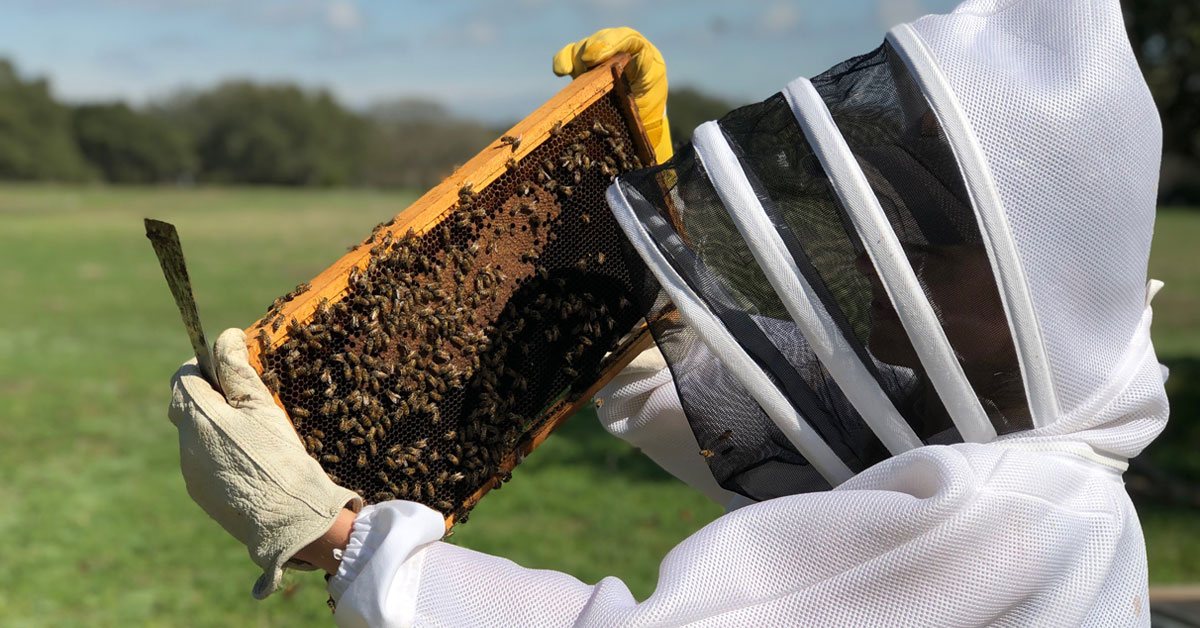
THE APIARY AT VISTA BREWING IN DRIFTWOOD, TEXAS PROVIDES HONEY FOR THEIR BEERS. (VISTA BREWING)
JULY 23, 2019

Brewers around the country use honey in ways that create flavors far more complex than sweetness. Many care so much about those delicate nuances that they have started apiaries, a sure-fire way to give them honey that can only be found in their area, to create flavor profiles that can only be found in their beers.

It’s not required that you manage hives to create a great honey beer, but brewers find that doing so keeps them in better touch with the honey’s origin and taste for producing more creative beers. Some breweries keep bees to support their farmland. The honey has become an important byproduct that’s fueled innovation in brewing. For others, the honey is the motivation — and they are happy that in seeking it, they can support a healthy agricultural ecosystem.

How Honey Influences Beer and Brewing
Regardless of the location of a hive, bees travel. Their destinations lead to the pollination of flowers, fruits, nuts and vegetables. Flavors from each come back with the bee to the hive and eventually make their way into the honey.

Through their honey, bees bring a sense of terroir to a beer.

“You’re drinking the land,” says Jacob Meglio, co-founder of Arrowood Farm-Brewery in Accord, New York. They are the first organic certified farm brewery in New York and they aim to showcase agriculture in their beers. Their beers represent seasonal change and their honey is an ideal ingredient that amplifies those differences from beer to beer.

Brewery-Bees-Honey.jpg

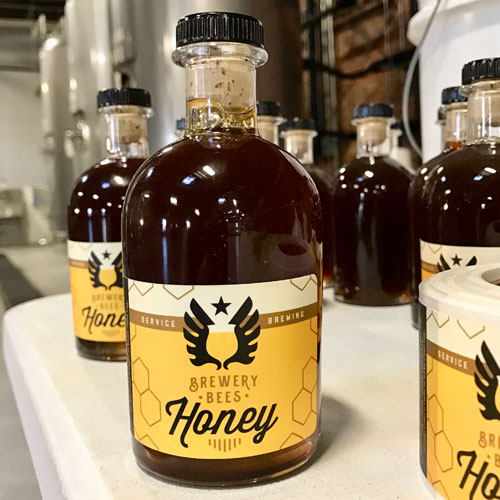
SERVICE BREWING IN SAVANNAH SAYS USING THEIR HONEY IN BEER “ADDS ITS OWN PERSONAL TOUCH TO EACH BATCH.” (SERVICE BREWING)
To the trained palate, the flavor variations in honey can be striking. Brandon Jones, brewer and blender at Yazoo Brewing Company in Nashville says, “Our honey definitely has buckwheat and pepper characteristics. There is a little citrus, but it’s more of pithy grapefruit.”

The brewery manages hives near the farmlands of West Nashville and have found that their bees spend time in an area rich with herb gardens along with pine and sap trees. For Jones, it’s been rewarding to say that they have something truly unique. No other brewery has honey exactly like this to use in production. Their Abeille Wild Ale is an oak-aged tart saison that undergoes a secondary fermentation with the honey to create a brew with notes of citrus, pepper, wildflowers, and pear.

You won’t get the same results twice. That is one certainty when using local honey. Meredith Sutton is the co-owner of Service Brewing Co. in Savannah, Georgia. They have brewed their Old Guard Bière de Garde for five years as a spring seasonal.

“Each year we have used a different type of honey. We have used yaupon honey, clover, orange blossom and even one that was a mix of Tupelo and wildflower. The honey adds its own personal touch to each batch, so each spring our Old Guard has a slightly different flavor profile from the year before,” she says.

(READ: Daughter of Fallen Marine Creates Beer to Support Desert Storm War Memorial)

Lessons Learned By Brewers
The honey harvested from their bees and the beers that result are rewarding, but managing hives can present more challenges than a few bee stings. Sometimes these challenges can be a bit heartbreaking.

Service Brewing Co. has taken a break from keeping hives for the time being. Sutton says, “Every summer I have lost my hives due to mosquito spraying. Two years ago I decided to take a break for this reason. It’s an expensive hobby. When you are a natural beekeeper–meaning I do not use any pest control in my hives–you invest so much time in protecting your colony without chemicals. The fact they they are killed by that very thing is a real bummer.”

Savannah has a long history of fighting mosquitoes and while there are areas that are protected from spraying, the traveling nature of bees makes it nearly impossible to keep them safe.

Even if spraying isn’t common in your area, there is more to keeping the bees happy and healthy. Michael King, brewer at Rogue Ales & Spiritssays, “It’s important to keep hives near the source of flowering plants (hops, fruit, vegetables and flowers). The area has to be well ventilated and far away from pesticides and roads as possible.”

Rogue-Honey-Kolsch.jpg

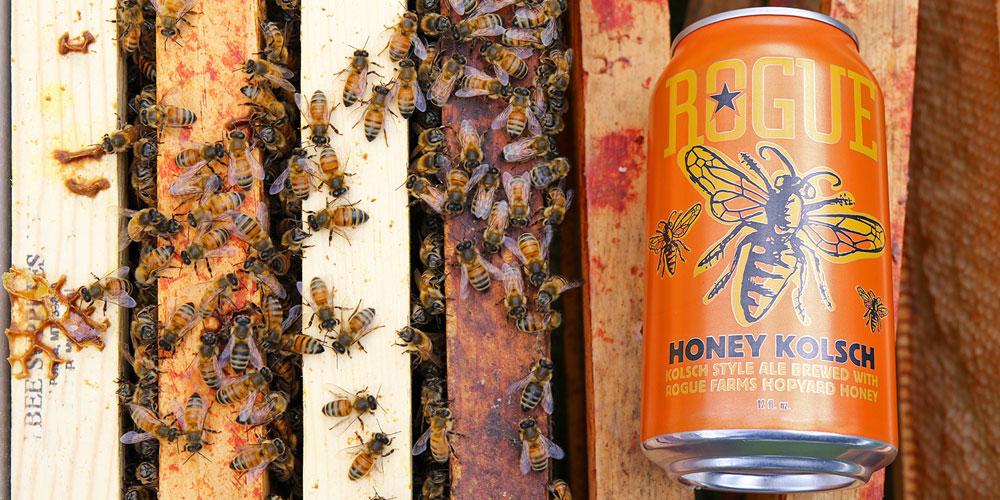
ROGUE BREWING STARTED KEEPING HIVES AS A WAY TO PROVIDE POLLINATION TO CROPS ON THEIR FARM. (ROGUE BREWING)
The Oregon brewery started keeping hives as a way to provide pollination to fruits, vegetables and other products grown on the farm. The honey from their hives is a bonus to use in their beers.

Once you have the right location, colony collapse and low production of honey are still risks. Karen Killough is co-founder of Vista Brewing in Driftwood, Texas. Their apiary provides honey for their beers such as the Dreamweaver, a braggot that they made with last year’s honey harvest. They expect to experiment with a new style with the 2019 harvest coming in July. The apiary is also used for teaching the community how to keep bees. The brewery partners with local BeeWeaver Apiaries to host educational classes on beekeeping.

“The biggest challenge in managing our apiary has been the Texas heat. Some years, rain and forageable plants are plentiful. Other years, lack of rain and forageable plants create challenges for the bees to produce a bountiful honey harvest,” she says.

(READ: How Long is My Crowler Good?)

Brewing Beer with Honey
Once brewers have the honey with its locally influenced flavor characteristics, how to produce the best beer with it is an individual process. The first step? “Taste all the honey!” says Service Brewing’s Sutton.

It’s an essential step emphasized by Jones of Yazoo as well. He admits that it may seem basic, but we are often quick to trust labels and descriptions from others. Taste the honey and taste many kinds of honey so that you can start to identify the subtle flavor differences. Orange blossom and wildflower are varieties many are familiar with, but there is also radish, lavender, blackberry, meadowfoam, avocado and almond honey.

King shares that they prefer wildflower honey at Rogue. It has a strong flavor that carries through to the final product. They expose the honey to as little heat as possible and avoid adding it directly to fermentation, unless the intent is mixed fermentation.

At Vista Brewing, they add the honey just before pitching the yeast. They also warm the honey by keeping it in a warmer environment so that it is easy to pour. This is a practice also adopted by Yazoo Brewing to help reduce the loss of product due to crystallization in the bottom of buckets.


Busy Bees: Breweries Experiment With Beekeeping
 
How to make sure fall allergies don’t take you out

Avoid them. Fight them. Whatever you do: survive.


By Emily Shiffer
October 4, 2019
UDKG3TFLYEQTBTAE4JRPFY7UVU.jpg

For some, this is what Hell looks like.Lukasz Szmigiel via Unsplash
If you suffer from debilitating fall allergies, you probably start worrying about them as temperatures drop and the leaves change color. But that’s too late—the allergens that get your nose running and eyes itching begin to fill the air long before the end of September.

“Fall allergies begin in early August and continue until the first frost, which usually is in November,” says Dr. Satish Govindaraj, head of the rhinology division at The Mount Sinai Hospital in New York City.

That could mean three or four months of misery if you’re unprepared, so it’s important to know what’s behind this assault on your senses and how to keep yourself from sneezing your way to the holidays.

Know the symptoms


QZJDYSMDBCWTK2JJNR2AQQ7ZGE.jpg


https://www.popsci.com/avoid-cure-survive-fall-allergies/
 
base.jpg


Look Closer: Insects Crawling for Food, or a Bigger Critter Crisis?


BPJ5DRG3WNGBKLNBM4Y5VSYZ5M.jpg

Simulations suggest that galaxies flow together in vast filaments.Volker Springel/Max Planck Institute For Astrophysics/SPL


If you could zoom all the way out from Earth, past the sun, past our galaxy, beyond the local group of galaxies the Milky Way belongs to, all the way out to gaze upon the whole universe… it might look something like an extremely unsatisfying serving of cotton candy.


You'd see massive holes mostly devoid of galaxies, stars, and even atoms, and betwe


https://www.popsci.com/cosmic-web-filament/


XZA3VizKrT5TQr2Uo-Tn_3hsEU6VAz4wrB-Y4BtzTJzNOFLL9qxZA-bNBhZ56IfP2buuMhkIeig7j1pmJT-OCv2doNr-59TITRwq3aS5Im5pjRqAil8AS9wRGNFSikwzRtkcRByDX8dBCE4QHi1at9wHgjF29rbIFfXeG4LAf1802pz5dL0FatQZu5jwJKoDYunHQBmBLhDvj2gmGwgTC2V0YDo=s0-d-e1-ft


wonder what makes one lust for such food these days
yet neve did before

age/wanting to loook after health more latterly may be
 
SMILE

keeping the earth happy too
- like
A guio ensuring your Diwali festivities keep the Earth happy, too

For some, it’s the most wonderful time of the year. But the popular holiday also puts a burden on the environment.


By Purbita Saha
October 4, 2019


RYXQZHW5YJGDSGGWLY2DGECWSA.jpg

Diwali celebrations light up streets, homes, and even the night sky.Suvan Chowdhury via Pexels


If you think 25 days of Christmas is a marathon, you have to try Diwali. This festival of lights, celebrated by millions of people across Southeast Asia, the West Indies, and other parts of the world, spans the month of October this year (the timing depends on the Hindu lunar calendar).


https://www.popsci.com/celebrate-diwali-sustainable/
 
thinking
great for the Aussie farmer/anything for rural
but
so American, you are determined t follow huh


Halloween pumpkin market serves up new opportunity for Kimberley farmers
Jack-o-lantern pumpkins from the Ord Irrigation scheme have made their way to supermarket shelves around the country this week.


These dairy farmers can see the water they desperately need, but aren't allowed to access it
Australia's dairy farmers are leaving the industry in droves as drought and sky-high prices for water take their toll.
 
personally more pissed that they were trying to insist/put some crap on us
that is possibly linked/associated with greenhouse,and expecting us to change our eating habit
as if its an individuals responsibility
would gladly oblige if WW companys/corporates
pulled there fingers out of there a....s first
money hungry devils,is all they do it for
sanctioned by there governments

F'n annoying to me also when theyve thrown in EMERGENCY to this climate debate
thats been raging for sevealy years,but only recently has becoe a important issue,that thyre still not grasping wholeheartedly

but agree to the younger consuming/readiy burniing off the excess

Aside from public health, calls are multiplying for people to cut back on meat consumption because of the climate emergency and the greenhouse gas emissions that come from animal farming.

Meat
Uproar after research claims red meat poses no health risk
One expert says findings by international experts represent ‘egregious abuse of evidence’

Sarah Boseley Health editor

Mon 30 Sep 2019 22.00 BSTLast modified on Wed 2 Oct 2019 11.47 BST

Shares
1,691


Critics of the study say many of the participants were young and unlikely to succumb to illness during the trial period. Photograph: Getty
New research that claims red and processed meat is probably not harmful to our health has caused controversy among experts who maintain people should cut down.

The World Health Organization has classified red and processed meats as cancer-causing. Public health bodies worldwide urge people to limit their intake of red and processed meat to reduce their cancer risk. The NHS advises that people who eat 90g of meat a day – equivalent to three thin slices of roast meat – should cut down to 70g.

Aside from public health, calls are multiplying for people to cut back on meat consumption because of the climate emergency and the greenhouse gas emissions that come from animal farming.

Advertisement
But the 14-member international team led by Bradley Johnston an associate professor of community health at Dalhousie University in Halifax, Canada, concluded that those who like meat should not stop on health grounds. “Based on the research, we cannot say with any certainty that eating red or processed meat causes cancer, diabetes or heart disease,” he said.

Many scientists agreed with the team that the evidence from studies around the world was generally poor. Some said that left them open to both interpretations – either that meat could cause health harm or that it did not.

Others said Johnston and colleagues were wrong to exclude environmental concerns about damage to the planet from clearing forests and animal farming from their work.

The lead author of the EAT-Lancet Commission, which in January advocated a plant-based diet for both environmental sustainability and health, excoriated the new work.

“This report has layers of flaws and is the most egregious abuse of evidence that I have ever seen,” said Walter Willett, professor of epidemiology and nutrition at the Harvard TH Chan School of Public Health, who advocates a plant-based diet.

He said many of the participants of the study were young and unlikely to succumb to illness in the short time period involved in the trials. “The magnitude of risk reduction by replacing red meat with healthy protein sources is similar to that of many drugs we use for treating high blood cholesterol and blood pressure, and we spend massive amounts of money on this,” he added.

But the series of papers published in the Annals of Internal Medicine journalused methodology most scientists said was thorough, pulling together data from studies around the world and grading their results. The best studies were those in which similar participants were randomly allocated to one diet or another.

“Among 12 randomised control trials enrolling about 54,000 individuals, we did not find a statistically significant or an important association in the risk of heart disease, cancer, or diabetes for those that consumed less red and processed meat,” Johnston said.

In other, weaker studies involving millions of people, which simply observe the effects of people’s usual diet, “we did find a small reduction in risk amongst those who consumed three fewer servings of red or processed meat per week. However, the certainty of evidence was low to very low,” he said.

Advertisement
Dietary studies are notoriously difficult to do because people may not always eat what they say they do or may not remember.

Gunter Kuhnle, professor of nutrition and food science at the University of Reading, said the research was thorough but that the weak evidence of possible harm should be taken into account.

“The data clearly shows that the while the association between meat and cancer does not have to be addressed urgently, it should not be ignored,” he said. “Small dietary changes can mitigate the effect of red and processed meat on cancer risk, for example a high-fibre diet.”

The World Cancer Research Fund, which warns of links between red and processed meat and bowel cancer, did not accept the new interpretation of the evidence.

Dr Giota Mitrou, director of research, said it “could be putting people at risk by suggesting they can eat as much red and processed meat as they like without increasing their risk of cancer.

“The message people need to hear is that we should be eating no more than three portions of red meat a week and avoiding processed meat altogether. We stand by our rigorous research of the last 30 years and urge the public to follow the current recommendations on red and processed meat.”

Prof Louis Levy, head of nutrition science at Public Health England, said:“Globally, the evidence indicates that people who eat red and processed meat should limit their intake.

“While it can form part of healthy diet, eating too much can increase your risk of developing bowel cancer. Following a healthy, balanced diet based on the Eatwell Guide is best for long-term health.”

Uproar after research claims red meat poses no health risk


 
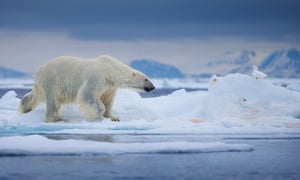
'We know they aren't feeding': fears for polar bears over shrinking Arctic ice


Expert Steven Amstrup says ‘the longer the sea ice is gone from the productive zone the tougher it is on the bears’

Edward Helmore


This year’s annual minimum of the Arctic sea ice tied with the second-lowest extent on record. Photograph: Chase Dekker/Getty Images
The loss of Arctic ice from glaciers, polar land and sea is increasing faster than many scientists expected, as the Intergovernmental Panel on Climate Change’s (IPCC) report on oceans and the cryosphere said this week.

That’s bad news for polar bear populations, a top expert involved in field studies on the endangered animals has told the Guardian.

'We know they aren't feeding': fears for polar bears over shrinking Arctic ice
 
decent info,i think

esp hitchiking
done my share and loved it
in Aus/Finland as well as WW
shame its dicy now,for many


Strange Maps
Mount Etna

The summit of Europe's most active volcano is also the world's only decipoint.


For millennia, Etna has been Europe's most active volcano. The Sicilian mountain is also the world's only decipoint. Ten municipalities meet at its summit — at least on a map.
Hitchhiking in Europe

Thumbs up? Map shows Europe’s hitchhiking landscape.


A popular means of transportation from the 1920s to the 1980s, hitchhiking has since fallen in disrepute. However, as this map shows, thumbing a ride still occupies a thriving niche – if at great geographic variance. In some countries and areas, you'll be off the street in no time. In other places, it's much harder to thumb your way from A to B.
Landmarks destroyed

Paris, destroyed: A map of buildings lost to history.


Following the blaze that ripped through Notre Dame, it feels like Paris had lost a major link to its past. But the cathedral is lucky to have survived this far: It was almost torched by revolutionaries in 1871. As the world's first communist revolt was crushed, other Parisian landmarks were set ablaze – many of which were lost forever.
 
we all have our favourites

a little unfortunate thats not one of some
however

and
they are so polite when asking
not demanding nor begging,even ordering almost threatning huih

DONTE grrr,i just d/wont if they try that


This is awkward to admit, but I have to be honest: 98% of our readers don't give; they simply look the other way. And without more one-time donors, we need to turn to you, our past donors, in the hope that you'll show up again for Wikipedia, as you so generously have in the past.