would say NATURE deserves an airing today,interesting articles
io think huh
especially health related
whats nore important than health
wealth,i dont think so
Neanderthal-like ‘mini-brains’ created in the lab with CRISPR
Hello
Nature readers,
Today we discover Neanderthal-like ‘mini-brains’ created in the laboratory with CRISPR, celebrate 20 years since the publication of the first drafts of the human genome and hear that Stonehenge was erected in Wales first.
![]()
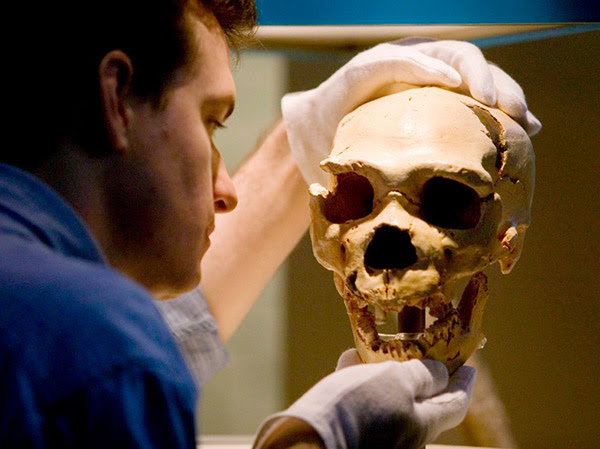
Most research on Neanderthal brains has to be done by looking at the size and shape of the fossilized skulls. (Natural History Museum, London/Science Photo Library)
Neanderthal-like ‘mini brains’ are bumpier
Brain-like organoids engineered to contain a
NOVA1 gene variant found in extinct Neanderthals and Denisovans are smaller and more roughly textured than those with the human version of the gene.
NOVA1 influences brain development, and
the new study suggests the human variant was important in our evolution. This is the first time researchers have used genome editing to revert a gene to its archaic form in human cells used to grow brain tissue.
Nature | 5 min read
Reference:
Science paper
Academic mothers face pandemic toll
New data show exactly how
the pandemic has raised the barriers — and created new ones — for women and mothers working in academia. A paper published this week showed that when a Canadian grant-funding agency asked researchers to submit proposals in just 8 days, only 29% of applications came from women. When the agency offered another grant round — but extended the deadline to 19 days and reduced the paperwork — women’s applications jumped to 39%. Another working paper from the US National Bureau of Economic Research published last month found that, during the pandemic, mothers have experienced a drop in research hours that is 33% larger than the reduction fathers have faced.
Science | 4 min read
Reference:
PNAS paper &
NBER working paper
Stonehenge was erected in Wales first
Stonehenge might have been built from an earlier stone circle: Waun Mawn in west Wales. Stonehenge’s majestic bluestone pillars had already been traced to their source. The stones were excavated from quarries in Wales as early as 3400 BC, about 500 years before Stonehenge was built. Now, researchers have used carbon dating and other techniques to suggest that
similar stones that once stood in Waun Mawn were removed at just about the time the first construction at Stonehenge began. The findings further develop a picture of an interconnected society centered on the Irish Sea that flourished in the fourth century BC.
Science | 5 min read
Reference:
Antiquity paper
The human genome sequence, 20 years on
![]()
Special
The human genome at 20
The publication of the first drafts of the human genome launched a new era in biological discovery, collapsing the number of expected genes, but vastly expanding the understanding of genetic regulation. Now, as researchers pump out individual genomes and genomic analyses by the tens of thousands,
the field is contending with some of the same central conflicts regarding data availability, equity and privacy that it faced at the outset.
Nature looks at what the 20 years in a post-genome world has wrought, and what to expect in the next 20.
Nature | 8-article collection
Infographics
The human genome: by the numbers
The Human Genome Project (HGP), with its comprehensive list of protein-coding genes, spurred a new era of elucidating the function of the non-coding portion of the genome and paved the way for therapeutic developments.
Enjoy a glittering, chandelier-like visualization of human genome data in a new analysis of its effects on publications, drug approvals and understanding of disease.
Nature | 9 min read
News & Views
Mapping humanity’s rich tapestry
In the 20 years since the first drafts of the human genome were made public,
an explosion in genome sequencing has revealed how our evolutionary history and health can be understood by analysing the diversity in our genomes. “We have genomes for hundreds of thousands of individuals — more than was imaginable 20 years ago,” write genetic epidemiologists Charles Rotimi and Adebowale Adeyemo. “Even so, we are just beginning to sequence diverse populations in the numbers needed to realize the promise of genomics.”
Nature | 8 min read
Podcast
The human genome, at first sight
This week marks the 20th anniversary of a scientific milestone — the publication of the first draft of the human genome.
Magdalena Skipper, Nature’s editor-in-chief, tells the Nature Podcast her recollections of genomics at the turn of the millennium, and the legacy of the achievement. “One of the things that I remember the most was that feeling of coming to the lab — in my case to work on
C. elegans — turning on the computer and going to the database to see if ‘my favourite part of the genome’ had been sequenced overnight,” says Skipper. “That was an amazing feeling, which I think is hard to imagine today.”
Nature Podcast | 27 min listen
Subscribe to the Nature Podcast on Apple Podcasts,
Google Podcasts or
Spotify.
![]()
From earlier in the week:
Feature
The Tower of Babel of human genome data
Data sharing was a core principle that led to the success of the HGP 20 years ago.
Now, scientists are struggling to keep information free. The principles laid out by the HGP, and later adopted by journals and funding agencies, meant that anyone should be able to access the data created for published genome studies and use them to power discovery. Today, researchers say they are trapped in a ‘Tower of Babel’ containing their data: a patchwork of repositories, with various rules for access and no standard data formatting.
Nature | 13 min read
Timeline
Milestones in genomic sequencing
Explore
a timeline of DNA sequencing, one of the most influential tools in biomedical research. It goes from the development of Maxam–Gilbert sequencing and Sanger sequencing in 1977 — which helped Walter Gilbert and Frederick Sanger to win the 1980 Nobel Prize in Chemistry — to the publication of the first draft of the human genome 20 years ago this week, and beyond.
Nature | Leisurely scroll
This article is editorially independent and produced with financial support from Illumina.
Books & culture
Increasingly madcap measures are being tried to control the invasive Asian carp in the US midwest. (USACE/Alamy)
From the front lines of geoengineering
In her latest book, Pulitzer-prizewinning environment reporter Elizabeth Kolbert asks: could some environmental fixes be worse than the problems?
Under The White Sky is
an arresting montage of just how hard it is to return balance to our exquisitely interconnected biosphere, and the extraordinary efforts people go to in the attempt, writes reviewer Gaia Vince.
Nature | 5 min read
Futures: Kintsugi for a broken heart
“Time is real, and it’s as fleeting as a puppy already halfway out the back door,” says author Brent Baldwin, who was inspired by his own teenage daughter to write
the latest short story for Nature’s Futures series. “I hope this story has reached you when you needed it, dear reader. I hope that your heart might heal a little faster and be even more beautiful than before. Broken hearts do mend. That’s real, too. I promise.”
Nature | 4 min read
Where I work
![]()
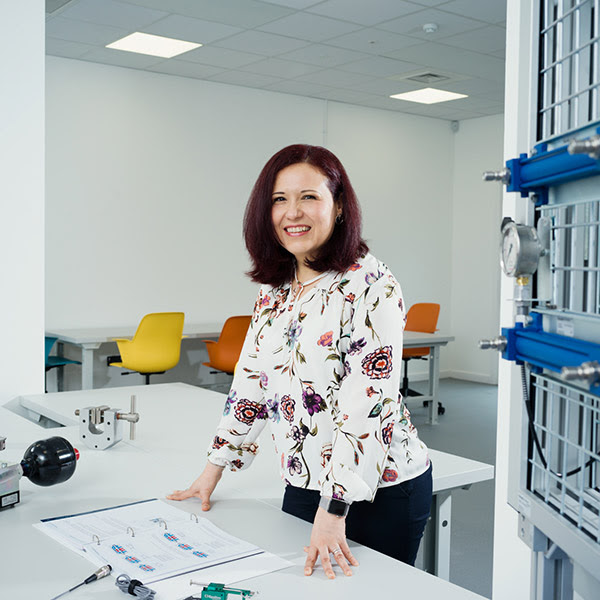
Elena Rodriguez-Falcon is the president and chief executive of the New Model Institute for Technology and Engineering in Hereford, UK. (Leonora Saunders for
Nature)
“Helping to build a university from scratch is the hardest thing I’ve done in my life, but the effort has paid off,” says Elena Rodriguez-Falcon, the president and chief executive of the New Model Institute for Technology and Engineering in Hereford, UK.
The innovative institution is discarding the requirement for standard pre-university qualifications, as well as the typical focus on lectures and textbooks. “Instead, [students will] spend their time working on actual projects,” says Rodriguez-Falcon. “You don’t train violinists by making them read about violins. You put the instrument in their hands and give them a chance to play.”
Nature | 3 min read
QUOTE OF THE DAY
“Scientists are notorious for running over time. If you short people on their questions, you lose all the trust you just gained, because it looks like you’re avoiding them. I generally try to double my question time.”
Immunologist Kizzmekia Corbett, who helped to develop the Moderna COVID vaccine, is tackling vaccine hesitancy — in churches and on Twitter. (
Nature | 6 min read)