
Random thoughts

like
HAKAIS conntribution to the envirtonment/conservation
mostly to do with our ocean preservation


The Great Dolphin Dilemma

For years, animal rights advocates have waged war against the US Navy for its use of dolphins in warfare and research. Is a resolution possible?

by Lina Zeldovich • 4,200 words / 21 mins


Fire at Sea

More than just bad luck is behind increasingly frequent and lethal container ship fires.

by Paul Hockenos • 1,000 words / 5 mins


A Faster Way to Find Illicit Fins

Slow, expensive testing has made DNA analysis a poor fit for customs agents on the hunt for protected species—but a new technique could change that.

by Alastair Bland • 650 words / 3 mins


One Great Shot: The Guillemot and the Iceberg

Carsten Egevang goes looking for seals in Greenland and finds a photogenic guillemot instead.

by Carsten Egevang • 150 words / 1 photo


Snapping the Snapper Snatchers

A remote camera on a nearby hill spies fishers ignoring the rules in an Australian no-take zone.

by Chris Baraniuk • 650 words / 3 mins
 
smile
incredible info out there
would likely try as hate mozzies ha
did you know that only the female ones bite


(Eye of Science/Science Photo Library)
Diet drugs suppress mosquitoes’ thirst
Researchers have discovered a way to stop mosquitoes from biting by making them feel full, using drugs designed to suppress human appetites. Neurobiologist Leslie Vosshall says that she decided to take this “completely zany” approach “as kind of a lark”, but now sees promise in the method for controlling mosquito-borne diseases. The next step: design a sufficiently powerful mosquito-specific diet drug that avoids unwanted effects on people.

Nature | 5 min read

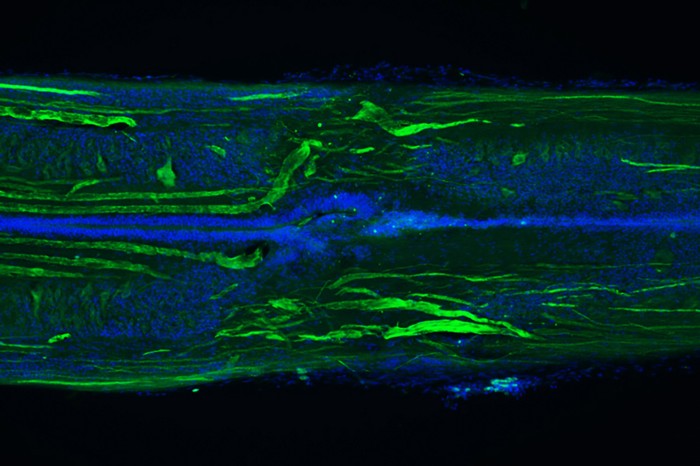
Jawless fish can regrow their spinal cords ― twice
Sever its spinal cord, and the eel-shaped lamprey will soon be undulating through the water as usual.

Nature | 6 min read
Lampreys can regrow their spinal cords twice
The lamprey is known for its resilience: after its spinal cord is severed, it can regrow part of its central nervous system and resume swimming normally. Now, scientists have discovered that the creature can repeat the feat even if the same site is re-injured.

Nature Research Highlights | 1 min read Reference: PLOS One paper Get more of Nature’s Research Highlights: short picks from the latest papers.

d41586-019-00478-2_16441066.jpg


Jawless fish can regrow their spinal cords ― twice


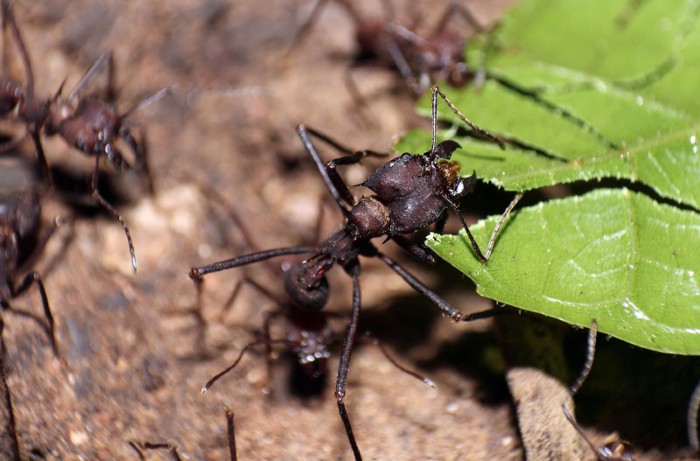
Ants build superhighways without bosses or blueprints
Hard-working insects achieve engineering marvels despite lack of cooperation
d41586-019-00227-5_16411402.jpg


23 JANUARY 2019


A diver takes a green sea turtle’s (Chelonia mydas) yearly measurements at Sea Life Timmendorfer Strand in Germany. These measurements have shown that the turtle, Speedy, is growing at a rate of 1 centimetre per year. (Markus Scholz/dpa)

See more of our picture editors’ picks for best science photos of the month.

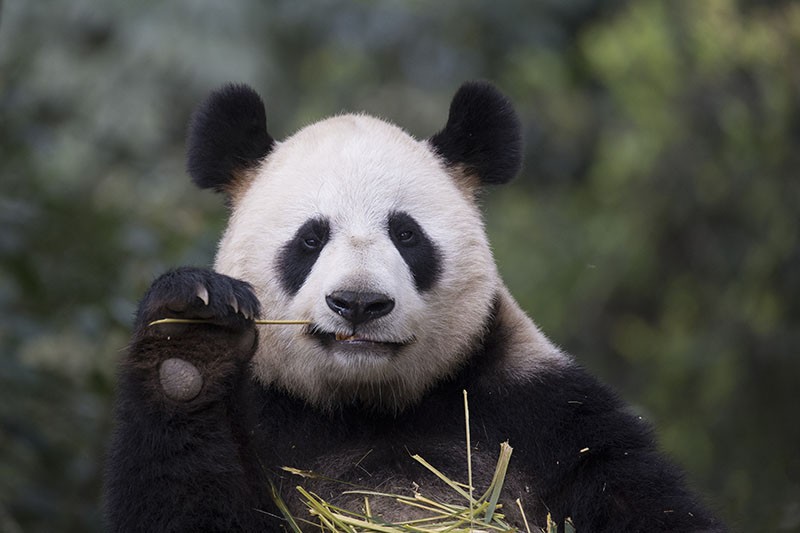
Battle over when giant pandas started their bamboo diet heats up
Switch to such restricted fare probably happened thousands of years ago, not millions, as some research has suggested.


d41586-019-00301-y_16427380.jpg


Battle over when giant pandas started their bamboo diet heats up
 
Forest SOS: Earth's green lungs disappear
Forests, particularly tropical ones, are fundamental to the fight against climate change. They produce oxygen, store carbon and are home to millions of people and animals. Yet they are disappearing at an alarming rate.


From a damp year-round lush green canopy, to a canvas of oranges and reds come the fall, to pointed trees with evergreen spindles, the mention of a forest will evoke strikingly different images depending on where in the world you live.

But for all those physical and geographical differences, forests have many things in common.

They help regulate weather patterns, prevent flooding and erosion, and provide food, water and shelter. They also provide oxygen, store CO₂ and, oceans aside, have the greatest biodiversity on the planet.

Still, forest is being lost all over the world. In 2017 29.4 million hectares (72.6 million acres) of tree cover disappeared. That's an area equivalent to 41 million soccer pitches and just slightly below the record set in 2016, according to the latest figures from Global Forest Watch (GFW).

Tropical tree cover loss, the monitoring tool noted, was particularly badly hit in 2017, with a decrease of 15.8 million hectares (39 million acres) — an area half the size of Poland.

Read more: The world is losing vital forests quicker than ever

Read more: Info-film: What is a forest and what is it for?

The tropical forests of South and Central America, Africa and Asia are home to about 80 percent of the world's documented species, although they cover just 6 percent of the earth's land surface. Yet, the financial gains to be made of their soil and huge hardwood trees have made them one of the planet's most endangered habitats. That's bad news for the fight against climate change, considering they also store massive amounts of carbon.

He also says clearance of forest for oil palms is a newly emerging problem. Palm oil has been one of the other main factors in driving global deforestation in other parts of the world. "We are getting reports from more and more countries in South America that the first palm oil plantations are planned or already installed," said Embert.


Huge tracts of forest are being lost. It's a 'nightmare scenario,' say scientists

Palm oil: A major contributor

Until recently, palm oil production had largely been confined to Indonesia and Malaysia. Oil palm and wood fiber (mainly used for pulp and paper) plantations are the two largest contributors to forest loss in both countries, according to studies by GFW and Indonesia-based Center for International Forestry Research (CIFOR).

Between 2001 and 2015, around 1.5 million hectares of primary forest were converted to such plantations in Indonesia. Primary forest is defined as woodland that has not been significantly disturbed by human activities and is considered to be the "best" in terms of biodiversity and carbon storage.

Bicknell believes there is no way to stop deforestation for now, and says conservationists should, therefore, focus on reducing impacts, such as species' expulsion and extinction.

One way to do this is by supporting protected and indigenous territories. In the Amazon, for example, deforestation rates are significantly lower inside such areas, says Embert.

Another is to promote certified sustainable wood products harvested through carefully planned selective logging. This entails felling selected trees in 30 to 40-year cycles and leaving behind a structurally intact forest.


Improved technology is helping in the fight against deforestation. The rainforest is home to countless creatures
https://www.dw.com/en/keeping-the-king-alive-lion-breeding-in-zimbabwe/a-42560831?maca=en-newsletter_en_DW-TV_Global_Ideas-5873-html-newsletterKeeping the king alive? Lion breeding in Zimbabwe
 
In Zimbabwe, some conservationists are breeding lions to ensure these vulnerable apex predators don't die out. A number of African countries are already reporting that lions are no longer present in their national parks.


As night falls, intruders stalk onto Lorra Sibanda's property at the edge of a vast bushland in Zimbabwe. The next day, the 42-year-old wakes to find the savaged caracases of her cattle and goats.
"We want to restock national parks of different areas within Africa where the lion population has dropped drastically, or is close to zero," Ngaatendwe Chemambo explained to DW. Chemambo is operations manager at Antelope Park, about 300 kilometers (186 miles) south of Zimbabwe's capital Harare, where ALERT is headquartered.

Lion tourism — help or hindrance?

So what are they doing to achieve this?

Currently, some 113 lions live alongside elephants, zebras, giraffes, kudus, impalas, hartebeests, wildebeests and other animals at Antelope Park, a private game reserve which offers guests overnight accommodation and "wildlife experiences," such as walking with lions for a fee.

Money raised from these tourism activities then goes to ALERT's conservation efforts, such as breeding and preparing lions for release into the wild.

The reserve has come under criticism in the past. In 2008, British newspaper The Sunday Timesreported that more than 50 lion cubs bred there were sold to big-game-hunting operations to be shot for sport.


Lion walks at Antelope Park are part of a fundraising efforts to finance lion conservation programs, according to the park

Antelope Park representatives denied to DW that it was in any way involved with trophy hunting. Even so, the tourism/breeding/release services the park does openly provide are themselves controversial.


Saving lions to benefit communities?


Lion populations have increased in countries such as Zimbabwe thanks to conservation efforts, say local authorities

While the International Union for Conservation of Nature's (IUCN) Red List of Threatened Species categorizes lions as "vulnerable," the population in countries such as South Africa and Zimbabwe has grown in recent years.

That's largely thanks to conservation efforts that involve the local community, said Tinashe Farawo, a spokesperson with the Zimbabwe Parks and Wildlife Management Authority, in an interview with DW.

"As Africa, we should speak with one voice when it comes to wildlife conservation, and support sustainable utilization for the benefit of future generations," said Farawo, adding that Zimbabwe would continue to promote a method of conservation that aims to both educate locals and provide them with tangible signs that conservation helps their communities.

Tough road ahead


Although, Cecil the lion was a local favorite, some Zimbabweans were bemused over the media frenzy following his killing

Winning over rural Africans to lion conservation and breeding programs will become more important in the future, believes Chemambo, especially if the continent's current population of 1.2 billion will double by 2050, as the United Nations predicts. Such a population increase would put even more pressure on lion habitats, with the animals much more likely to encounter humans.

Sibanda remains skeptical. She says she was one of the Zimbabweans who scoffed at the media frenzy created when Cecil the lion was killed on the boundary of Hwange National Park by an American dentist.

Read more: US dentist accused of killing Cecil the lion

Read more: Accused lion hunter released on bail in Zimbabwe

"I am still puzzled why people consider lions special. Special for what?" asked Sibanda. "I have lost countless goats and cattle to lions. Now you tell me they want to breed them? Why? It does not make sense to me."

d
isgusting b....
shoot the poachers
-n i said
 
oh
to be crazy over bees
everyone going nuts re there mathmatrice prowess, what about there tireless free work to pollinate/feed us
incl our theft of there honey huh
while we do our best to kill them off with pesticides/insecticides,like the etc etc etc collateral damage FFS
have it happen to you/yours you barsteds

yep
im Sunday MAD

When most people picture math lessons, they imagine pencils, paper and desks, not sugar-water rewards and tiny mazes. But one group of cognitive scientists isn’t teaching arithmetic or calculus to high school students. They’re training bees to perform simple addition and subtraction. Image courtesy of Charles J Sharp, CC


Happy Saturday, science peepers!


NZ
having ts usual little bit of global similaritie

DEFENCE
9 Feb 2019

Nelson fire live updates: Day 5
10:08 pm on 9 February 2019

Share this


The fire burning more than 2000 hectares of Nelson bush is closing in on the town of Wakefield as 23 helicopters, two planes and 150 firefighters today worked in what emergency services say is a dynamic and changeable situation.

eight_col_firefighter.jpg

Firefighters dampening down hotspots in the fire zone in the north east sector. Photo:RNZ / Dan Cook

Follow our live updates here

Check here for the essentials, or scroll down for the latest live updates
 
speaking of science trees
incredible story
WATCH listen absorb,please
your weekend special
- i said ha

Shhh … people are trying to read this fab science news.

Earth’s most massive living thing is struggling to survive


This week in science, we learned:

What looks like 47,000 separate trees spread out over 106 acres in Utah are actually all offshoots from a single, massive Aspen tree root. It’s known as Pando, and it is believed to be the largest living organism on Earth. But scientists say that overgrazing by deer and elk is now threatening Pando's survival, as the PBS NewsHour Weekend's Christopher Booker reports.

Earth's most massive living thing is struggling to survive
 
Google may be good for lots of things................but it would be absolutely frigging useless if it did not ride on the backs of those who got out there, actually accomplished/created something original for it to profit from.
 
incredible what people get up to
sharing where they are at in life
lot better than beinng stuck in a little closed relatively selfish world

Drone Captures Thousands of Years of Archaeology on Remote Scottish Islands

A drone survey of Canna and Sanday Islands collected 420 million data points, creating what may be the most detailed 3-D map of islands yet


To view this content we will need your consent to set third party cookies.
For more detailed information, see our cookies page.

Read more: Drone Captures Thousands of Years of Archaeology on Remote Scottish Islands | Smart News | Smithsonian


Should the Himalayan Wolf Be Classified as a New Species?
Years of expeditions in the world’s tallest mountain range reveal that Himalayan wolves have developed genetic adaptations to living at high altitudes


Read more: Should the Himalayan Wolf Be Classified as a New Species? | Science | Smithsonian

himalaya-bg3_crop.jpg


Should the Himalayan Wolf Be Classified as a New Species? | Science | Smithsonian


quite funny
i think anyway

When elephant seals venture onto Drakes Beach, a scenic destination in California’s Point Reyes National Seashore, wildlife management workers typically shoo them away by shaking blue tarps in their direction. It doesn’t scare the seals, John Dell'Osso, chief of interpretation and resource education for the seashore, tells Amy Graff of SF Gate; it just annoys them

, and helps keep the animals safe from humans, and vice versa. But during the longest government shutdown in United States history, there wasn’t enough National Parks staff on hand to stop elephant seals from plopping down onto the beach. And now the seals have taken over.


A Horde of Elephant Seals Conquered a California Beach During the Shutdown
Read More ››


A Horde of Elephant Seals Conquered a California Beach During the Shutdown | Smart News | Smithsonian

while i dont have a mortgage on certain thtreads
theyd/some would be long gone dead buried forgotten etc etc
matter of keeping things alive/varying as we go/progress
 
Last edited:
personal thought believed for many years we will all end up there lokking down, not being able to do say a thing
cold as hell, and
esp important
the worst a bastard weve been ojn earth, the further back in the depths of herll one will be
politicians beware
actually no
dont give a F'ck about you rutyhless killers of humandkind


More stars than grains of sand on Earth? You bet

More stars than grains of sand on Earth? You bet


More stars than grains of sand on Earth? You bet


replacing with a hallucinatory i doubt it
esp if they cant make money from it
still ...

MENTAL HEALTH

The Push to Legalize Magic Mushrooms for Depression and PTSD
BY TROY FARAH
Activists, entrepreneurs, and doctors in the US and Canada are working to decriminalize psilocybin psychotherapy and calling for a psychedelic revolution.
 
e5d47fb2cwestminster34-jpg-mobile.jpeg


021219dog2.jpg


Photos, Video: The Absolute Worst Most Heinous Garbage Dogs Of Westminster Dog Show 2019
Warning: these are truly the worst dogs in the world....


Photos, Video: The Absolute Worst Most Heinous Garbage Dogs Of Westminster Dog Show 2019

haha genuinely like/want one,two

Before You Go

Frank Franklin II/AP
 
Pondering behavior for attending a memorial service for someone I barely knew and didn't care about, instead, I'm attending to be supportive of someone who I do care about. :no_mouth:
 
uuuhhmmm
pc/gw/cc, over tradition uhmmmm going too far maybe
well mmmmmm


iUU1FedBmM1J2on9pY-4gmbejUHOrmZSkDF5bnJ0vwSK956C4R2I_IPb8wCTSzIHtjVuQe1P71D8gdaeBGWouTUxYt5H7tMD5fUmRe-eBu97f02LMSegigWgdxnsohI-clqdMTGMj0iBpfpv4Ieh9Q1SveAmFZ_PyIeCHgalz-JntwfI5FMszg=s0-d-e1-ft

Tyler Varsell

KCb9EvhJco9rdpD3PRYlyBtxcEpSAsx7XJtd_uhb4GkSTkChtWO7-schCUW1Jximg0nI2mqSWqaCTjEYa08QkWTxQnHJM2tiVZYNkw4OpIAov2y4Jf5CkyTvlRYOrPt3W8YxfIqcwMshR4-_jfHCU1eFDce18rJUz6t6DhLEZdMpH7Nl9Ekaaw6ztZ-0UOxXNaI=s0-d-e1-ft

By Jillian Mock
Another Valentine’s Day is here, and we all know what that means: paper Cupids, heart-shaped boxes of chocolates and the classic bouquet of red roses. Lots and lots of roses. This year, Americans are expected to spend $1.9 billion on flowers alone, according to the National Retail Federation.
But those beautiful blooms may come with an environmental price tag. Most of the fresh flowers sold in the United States are grown in Colombia or Ecuador, where there is plenty of sunshine and balmy weather. Flowers are so perishable that most are transported in refrigerated airplanes, an extremely carbon-intensive way to travel. What’s more, growing flowers can be a thirsty, pesticide-heavy endeavor, with the potential to contaminate or strain local water resources, said Kathleen Buckingham, a research manager in the forests program at the World Resources Institute.
Flowers grown closer to home could have an even larger carbon footprint. In colder regions, even temperate California, the flower industry relies on energy-intensive greenhouses. While airfreight is costly in terms of carbon emissions, heating and cooling greenhouses is much more so. A 2007 report by a researcher at Cranfield University in England found that growing 12,000 roses in Europe produced about six times the carbon emissions as growing those flowers in Kenya and flying them to Europe.
So what’s a romantic to do this Thursday? You could skip the flowers altogether, or look for responsibly grown blooms. Organizations like Fair Trade USA and the Rainforest Alliance examine flower farms and give their stamp of approval to farms that mitigate environmental impacts and ensure that workers, who are predominantly women, receive fair wages, health care and other benefits. Not all programs incorporate greenhouse gas emissions in their standards, however, and this remains a problem for the flower industry to tackle, Ms. Buckingham said.
Your local florist may be able to help you learn more, as many track where their flowers come from, said Cheryl Denham, an owner of Arizona Family Florist in Phoenix.
So, no matter how you decide to celebrate Valentine’s Day this year, try to show the planet a little love, too.