Apparently,

Is It a Good Idea to Add Water to a Fine Scotch?


apparently/shit NO

Chemists have found that adding a splash of water to whiskey causes flavor
molecules to rise to the drink's surface.

Does a little water in your whiskey really make it taste better? That’s
the conclusion of Swedish chemists whose research appeared in the August
issue of the journal Scientific Reports. Bjorn Karlsson and Ran Friedman of
the Linnaeus University Center for Biomaterials Chemistry used computer
simulations to study three important molecules in the drink -- water,
ethanol, and guaiacol. The latter is a molecule commonly found in
single-malt Scotch whiskies. The researchers found that when whiskey is
diluted, the ethanol and guaiacol molecules cluster at the surface of the
glass, bring

Why ruin good water by adding Scotch?
Just muddies it up.
 
  • Like
Reactions: rbkwp
How One Generation's Trash Became Another's Vacation
VxD7WI2xp-EQxXkTOzXm3om2x-FKIM4ZnmL1hNMT4seocV-iaTjb0WkOkmoaOuZ3DOUx9CEl1uSQfj3TmeZK79siBAeY_CCH04OWbEz_2I9Kc73Xid871pUX8tklskngujCDv3BUFLMuwR9AzX4RIN0-jTxqto413lpCvOc=s0-d-e1-ft
Fort Bragg, California, is located in the northern part of the state and on the Pacific Coast. As seen above (via the city's Wikipedia entry), the city has some pretty spectacular views of the Pacific Ocean, so it's not surprising that there's a decent tourism industry there. But one of the main tourist sites isn't quite as natural as it appears.

Before the 1850s, Fort Bragg and the surrounding regions were home to the Pomo, a tribe of Native Americans. In 1856, the American government set up a reservation in that area and a year later, the government established Fort Bragg as a way to maintain control over the reservation. By 1866, the reservation was no more, the military outpost was abandoned, and Fort Bragg and neighboring areas were opened to settlement by westward-bound Americans. The city became a hub for an emerging lumber industry; lumber mills dotted the landscape and the mouth of the Noyo River, pictured, became a thriving lumber port. In 1891, many of the smaller lumber mills combined into a company called the Union Lumber Company, and effectively, Fort Bragg became a company town.

Over the next 20 years, promises of employment caused Fort Bragg's population to nearly triple -- it jumped from about 900 people per the 1890 census to nearly 2,500 in 1910. And with these extra people came a lot of extra trash -- trash that needed a place to go. That proved to be a problem: residents couldn't dump it on company property, and the company owned most of the land.

The solution was the beach -- there was (and is) a coastal area, just over a cliff then-owned by Union Lumber -- which was open to the public but hard to get to. So, that's where the trash went -- over the cliff. According to the Los Angeles Times, "most of Fort Bragg used the beach as a dump, leaving tons of garbage, glass, china, [and in later years,] spark plugs and engine blocks to rust and crumble at the edge of the Pacific." This practice, according to various reports, lasted for decades; the beach even earned the nickname "The Dumps." (The only effort to reduce the trash pile came in the form of fire -- on occasion, locals would light the garbage ablaze to keep it from getting entirely out of control.)

In 1967, the town wised up and established a true municipal dump. Some of the more hazardous waste was removed from the ad hoc beach solution the city had used until then. But other than that, The Dumps were left as-is, with nature left to deal with it. And nature did, resulting in this:

yyfcgV5TnCApwfri9_1_fWRFZ_jqfPi1IsS3rwxvBKUM9Xk3gaCIzOx74VPmfHqyBi7PpAYv4bgNqAaJVT1b0O4rpONiCbpbIL79aeGnwiG5ljK9zmu_Y_r9Wmtlwh2MG0gEYad3fSZogEx56Q3_UA3qthE0CpE1UEXbf2s_tS1rvhk=s0-d-e1-ft
That's what the beach looks like today (as of July 2015). Can't tell what's going on? Here's a closer image of the "sand."
QSYboDUB2t1LBXpT4GyUwhNUSuX4S9Lbsuj8nT8J3HqEznOfinvmhUOOFObyALGhy13cRaPvPHqEVrvFQyOy5KGu7Cd114QaeYLy0rlYs_cS1F3rx2kXMSoCy1rkqoQxfV7Ei0suNoPObVgF0_4UK-s7VyzZL68I3ji_22s=s0-d-e1-ft
Yes, that's glass. "Sea glass," specifically, but the name is misleading. The garbage on the beach, neglected for decades, has been worn down by the ocean waves -- and the glass has turned into tiny, smoothed pieces of glass of dozens of different hues and translucency. And there's a lot of it -- enough to cover the entire beach. As a result, "The Dumps" is now known as "Glass Beach," and it's become a tourist attraction and a point of local pride. (There's a sea glass museum, and for a few years, there was even an annual sea glass festival.)

But it may not last. Glass Beach's popularity has caused a new problem -- the opposite one as before. As CNN reported in 2006, "curious visitors and occasional school groups sift through sandy crevices, filling buckets, pockets, and purses with colorful finds" -- that is, the tourists are taking some glass home with them. As a result, Glass Beach is slowly being depleted of its glass, and there's no trash around to turn into a fresh supply. Back in the 1960s, Fort Bragg wanted people to stop dumping glass on the beach; today, MacKerricher State Park -- which since annexed the beach -- has signs posted warning visitors not to take any sea glass with them.
 
apparently

The Fake Illness Which Saved Lives
In July of 1943, Italy's role in World War II pivoted dramatically. Allied forces landed in Sicily, successfully invading the then-Axis power. Before the month was out, Italy's fascist prime minister, Benito Mussolini, was no longer in charge and, instead, was under lock and key. His own Grand Council of Fascism censured him with a vote of no confidence; in response, Italy's King Victor Emmanuel III removed him from office and had him arrested.

The king and the new government began armistice talks with the Allies shortly thereafter, but that took time, and in the interim, the king and new leadership fled to the south, hoping to avoid the Germans. This gave Germany the chance to occupy Rome, which they held until the middle of 1944.

All told, the German occupation of Rome lasted for only about nine months. But for the city's Jewish population, that was a dangerous, and typically deadly, time.According to the United States Holocaust Memorial Museum, of the 12,000 Jews living in Rome in September of 1943, nearly 2,000 were deported to and murdered at Auschwitz.

But for the heroics of some fast-thinking doctors, that number could have been higher.

The 10,000 or so Jews who survived the nine-month ordeal did so by fleeing into the Vatican, which was neutral during the War, or to other Catholic outposts in the area. Some ended up at Fatebenefratelli Hospital on Rome's Tiber Island, an institution run by the Church since its founding in the mid-1500s. Reports vary, but between two dozen and one hundred Jews took refuge within its walls. But the Nazis didn't respect that boundary. In October, the Germans entered the hospital, demanding that the doctors turn over the Jews, mostly children, in their care.

Three of the doctors -- Adriano Ossicini, Vittorio Sacerdoti, Giovanni Borromeo -- came up with a plan: write on the refugees' charts that they were afflicted with a condition called Syndrome K -- a disease which, to the layperson, appeared to be highly contagious, and best avoided. But in reality, it was entirely innocuous -- it was fake. As Quartz explains, "the disease did not exist in any medical textbook or physician’s chart. In fact, it didn’t exist at all." Quartz continues:

The fake illness was vividly imagined: Rooms holding “Syndrome K” sufferers were designated as dangerously infectious—dissuading Nazi inspectors from entering—and Jewish children were instructed to cough, in imitation of tuberculosis, when soldiers passed through the hospital.The idea was that the Nazis entering the hospital would let the Jewish children be; even though the German soldiers were under orders to seize and deport them, self-preservation, the doctor's hoped, would trump such cruelty.

And, as Dr. Sacerdoti would explain to the BBC decades later, the plan worked: "the Nazis thought it [Syndrome K] was cancer or tuberculosis, and they fled like rabbits." As a result, a few dozen people, otherwise doomed, were spared.
 
  • Like
Reactions: Max_Polo
How Big Was the Largest Known Land Animal?


wiseGEEK

apparently

theyve never heard of Trump

Paleontologists think that a dinosaur called Patagotitan mayorum was the
largest known land animal that ever lived.

The new heavyweight champion of the world has just been crowned. While its
bones were found in southern Argentina in 2012, the significance of
Patagotitan mayorum, a long-necked, plant-eating dinosaur that lived 102
million years ago, was finally unveiled in research published in the
journal Proceedings of the Royal Society B in 2017. The dinosaur weighed
about 76 tons (69 metric tons), was likely 120 feet (37 m) long, and nearly
20 feet (6 m) high at the shoulder. The archeological find included a
femur, or thigh bone, that measures 8 feet (2.4 m) in length. Patagotitan
mayorum is a new species in a diverse group of prehistoric creatures called
titanosaurs. It is the largest land animal yet to have been discovered.
 

apparently, oh well, tuff, live with it???


The Power of Being Bored
Boredom, in today's world, is fleeting. Because of our phones -- supercomputers, but pocket-sized -- we're never more than a moment away from something to distract us from our idle time (battery life permitting). That may seem like a bad thing -- our brains need a rest and chores, like doing dishes or taking out the trash, need attending to. But it turns out, there may be an even greater benefit to being bored. To figure out why, let's read a phone book.

Nah, that sounds terrible. Instead, let's read about other people who were instructed to read a phone book.
LtYJUptRdAnf3jk0KWB1hvx3RX0jvvkoF8Tw30YxLCmY6pxGSdUJ3U1GH7HEceM2uhwegxUzhTOFeQ93buAniY3YGhOgeB5rPAOiXZCI6ybW1XcJHF6cPaG6dp1hEscSnBo8PHypEdhzbBHFJ6UYte77LEMvgf9wK6PiFqU=s0-d-e1-ft
For those of you who are too young to know what a "phone book" is, there's one pictured above. That section or book was called the "white pages," and it contained a listing of people, addresses, and their phone numbers. (Some businesses or municipal offices were sometimes published in larger type and/or highlighted, but you get the point.) If you want to read a good, engaging book, there are plenty of other options. If you want to read something boring, read the phone book.

That's what Dr. Sandi Mann, a philosophy professor at the University of Central Lancashire, decided to have her test subjects do. Dr. Mann, who studies boredom (which, if you think about it, creates a personal paradox for her), co-authored apaper with student Rebekah Cadman investigating the impact that boredom had on creativity. The Harvard Business Review explains the set-up:participants were either assigned the boring task of copying numbers from a phone book or assigned to a control group, which skipped the phone book assignment. All participants were then asked to generate as many uses as they could for a pair of plastic cups. This is a common test of divergent thinking—a vital element for creative output that concerns ones ability to generate lots of ideas.The result: those who copied from the phone book came up with notably more creative uses for the cups. Being bored, it seems, resulted in more creative juice flowing.

Their theory was that when the brain is seemingly idle, it wanders, and we daydream. So, Mann and Cadman decided to continue the experiment and turn the boredom up a notch in hopes of finding more evidence to support this thesis. In this second phase, there were three groups. One group read entries from the phone book to the second group, which recorded what they heard. The third group -- the control group -- skipped the phone book portion altogether. Science Dailysummarizes the results.Again the researchers found that the people in the control group were least creative, but the people who had just read the names were more creative than those who had to write them out. This suggests that more passive boring activities, like reading or perhaps attending meetings, can lead to more creativity -- whereas writing, by reducing the scope for daydreaming, reduces the creativity-enhancing effects of boredom.So if you're looking to do something creative, it may be a good idea to find something boring to accomplish first. Not only will you get a chore out of the way -- those dishes aren't going to wash themselves! -- but you may also unlock some added brilliance.
 
apparently you can


The Dead Man Who Sued to Make Himself Alive
Donald E. Miller, Jr. was dead -- he died in 1994.

Nearly two decades later, very much alive, he stood in an Ohio courtroom. His goal: he wanted to not be dead anymore. Ohio probate judge Allan H. Davis had to tell him the bad news: Miller was to remain dead.

The problem started nearly ten years before that day in court. In 1986, Miller, then unquestionably alive, ran out on his wife and two daughters, leaving them in significant debt. He didn't do anything to help them thereafter; rather, he disappeared -- no one who knew where he went, as he never told anyone. More importantly, he never sent any child support, alimony, or other financial assistance, making this deadbeat dad was as good as dead to those back in Ohio.

But officially, he was alive -- at least until 1994. Donald owed more than $25,000 in unpaid child support, money his family would certainly never see. So his (effectively) ex-wife Robin asked the state to declare him legally dead. Doing so would entitle her and the children to a Social Security death benefit of about $30,000 -- money the family could really use to account for that gap. The court agreed. Donald Miller died that day -- as far as the law was concerned.

Fast forward to 2005 and Donald re-emerged, per the BBC, only to find out (via his parents) that he had been dead for more than a decade. That proved to be a problem for Mr. Miller -- when he applied for driver's license, he was rejected in light of the fact that he was dead. (That makes sense; corpses can't pass the eye exam.) Similarly, it's difficult to demonstrate that you're authorized to work when your death certificate is your best form of ID. So it's understandable why Mr. Miller went to the judge to ask to be reborn.

But there was a problem. If Mr. Miller came back to life, the former Mrs. Miller may have to repay that $30,000, plus interest. (To make matters even more confusing -- but only tangentially so -- the former Mrs. Miller was now the former, former Mrs. Miller, having remarried to another man whose last name was Miller. This has nothing to do with Mr. Miller's status as dead versus alive, but it was weird, so I'm sharing it.) Even though she had forgiven her ex-husband and had moved on, she,per the New York Times, challenged her ex-husband's wish to be reinstated as a living person.

The court took her side. According to Ohio law, a deceased person only has three years to challenge the declaration that he or she is deceased. Donald Miller missed that deadline by a lot. As such, the judge's hands were tied and be very living Donald Miller remained very much dead in the eyes of the law.

At least, in the eyes of state law. The judge suggested that Mr. Miller petition the United States Social Security Administration to get a new number issued or the equivalent so that he could live a productive life as a living, breathing human being. He did and seems to be successful. But as a side effect, the Social Security Administration decided to go after his ex-wife and children for the wrongly issued death benefit. As of 2014, the matter was still pending -- and Miller is still alive, but not according to Ohio.
..
 
  • Like
Reactions: BillM
apparently

The Man Who Ate Potatoes. Lots of Potatoes.
If you haven't read the 2014 book The Martian, well, you should. (It's excellent.) There's a mini-spoiler ahead, so, reader beware.

That's your warning. This sentence is here just to make you scroll down a bit before the spoiler hits. This one too, and the next. Let's move on.

So, in the book, there's a guy -- an astronaut -- who is stranded on Mars. He's relatively safe, given the planet he's on, but he's going to need food. For reasons I can't quite remember (I gave away my copy of the book), he has some potatoes on hand, so, absent other options, he decides to become Mars' first potato farmer. His plan is to subside on a diet of almost entirely potatoes -- supplemented only by the limited other food, vitamins, and whatever else he has on-hand -- until he somehow leaves Mars (or, more likely, doesn't). Given where he was, he didn't have any better options. But it led some people to ask: could a human survive on a diet of only potatoes?

After the movie (which I haven't seen, long story) came out, Popular Mechanicsasked a researcher named Bruce Bugbee to chime in. Bugbee runs the Crop Physiology Lab at Utah State University and studies things like how to grow food in space. Per Bugbee, potatoes are "a good choice" if you're in the Martian's situation; "they're a good producer of carbohydrates and they can be a big part of the diet." But, the nutritionists Bugbee consulted with warn, you shouldn't go all-potato. They recommended 30 to 40 different foods; Bugbee, revising that to account for the difficulties of space travel, concluded that three to four -- with appropriate supplements -- would be okay.

He probably should have spoken to Chris Voigt.

Voigt really likes potatoes -- it was his job. In 2010, he was (and still is) the executive director of the Washington State Potato Commission, an organization whose mission is to support the potato industry. And October 1, 2010, Voigt put his money -- or his crop, at least -- where his mouth is. On that date, he began a campaign to eat only potatoes, almost without exception. A typical day involved twenty potatoes -- "no toppings, no sour cream, no butter [. . . ] literally just potatoes and seasoning, and oil for cooking," he told the TODAY show.

Eater provides more of the details of this endeavor. One time, he ate an expired half-ounce bag of potatoes chips, because that was the only potato product the restaurant he was at had on hand. Then there was the potato ice cream made "by blending riced potatoes and ice and putting it in freezer," and "topped with an ersatz chocolate sauce composed of a 1/2 cup cocoa powder, a 1/2 cup artificial sweetener, and water." And finally, when he had a craving for pickles, he "soaked a potato in pickle juice" and "then he ate the potato."

The goal wasn't just for publicity, either. Voigt was explicitly trying to demonstrate that a person can live on potatoes alone in order to affect regulatory change.According to a nutritionist who spoke with Voigt, "the USDA had proposed eliminating the potato or restricting its consumption in various federal feeding and nutrition programs," and Voigt's stunt was a protest which demonstrated, in his view, the fallacy (in his eyes, at least) of that proposal. It worked. The USDA left the potato rules as-is.

Voigt's diet also caused him to lose 21 pounds over the course of the sixty days, but potato fans beware -- it could be dangerous. According to LiveScience, "you need healthy kidneys to process the excess potassium delivered by 20 potatoes a day," and "you also need a store of nutrients potatoes lack, such as vitamin A for proper vision, or else exit this diet blindly." Voigt spoke to a doctor before attempting the stunt to make sure he wasn't at risk. So please, don't try this at home -- unless you're living at a space base on Mars.
 
  • Like
Reactions: BillM
apparently

het fucked is my opinion


Lack of sleep is killing us

Neuroscientist Matthew Walker says we are in the midst of a “catastrophic sleep-loss epidemic” that is destroying our physical and mental health. His advice: give yourself a non-negotiable eight-hour sleep opportunity every night, and go to bed and wake up at the same times every day, no matter what.

 
  • Like
Reactions: BillM
Do Animals Notice Human Gender?

apparently
and yes i think some animals are perceptive enough to know the difference
some males project stress
some females may inadvertently disguise there stress levels with perfume

my amateurish thoughts on the matter huh

Due to pheromones, male researchers cause high levels of stress in lab
rodents, often skewing experiment outcomes.

Mice and rats play a key role in the development of new drugs and other
medical advances. In fact, 95 percent of all lab animals are rodents,
according to the Foundation for Biomedical Research. But for years,
researchers have had trouble replicating the findings of research involving
rodents, causing some to question the validity of results. In 2014,
scientists at McGill University uncovered something that may explain why.
They determined that male researchers trigger a stress response in mice and
rats, making them less sensitive to pain -- and thereby affecting
experiment outcomes. Female researchers had no such effect on the rodents.
Read More: http://www.wisegeek.com/do-animals-notice-human-gender.htm?m
 
apparently??


When Baseball Players Left it on the Field
At a very early age, our parents, teachers, and caregivers tell us to clean up after ourselves. Put away the toys, clear your dishes, throw away that dirty tissue because, no, mom and dad don’t want to touch your boogers either.

What’s good for preschoolers is good for baseball players, to the point where there’s even a rule about it. Major League Baseball's rule number 3.10 states:

Members of the offensive team shall carry all gloves and other equipment off the field and to the dugout while their team is at bat. No equipment shall be left lying on the field, either in fair or foul territory.Today, we take it for granted that, when you leave the field, your glove comes with you. But that wasn’t always the case -- and wasn’t the norm, either. Before 1954, when that rule was added, it was customary for players to leave their gloves on the field -- outfielders would drop them where they stood, shortstops and second basement would typically throw them onto the infield grass just off the dirt, and the first and third baseman would toss their gloves into foul territory. (The pitcher and catcher typically put their gloves on top of the dugout.) It’s unclear where the custom comes from or whether there was some superstition about bringing your glove into the dugout, but the tradition -- for decades -- was to leave the equipment behind.

One thing is for sure, though: the habit of leaving your glove behind wasn’t all that convenient, in large part because opposing teams had few qualms screwing with each other’s gloves, even though retribution was easily achieved the next inning. Players would steal gloves or hide them, causing panicked fielders and delayed games. As an article from Sports Illustrated in 1984 recounts, “It became commonplace for players to stuff an opponent's mitt with grass or sand or rocks” -- and worse. The Sports Illustrated story further informs us that if “word got around that a certain player had a particular aversion to certain creatures,” that player “immediately became a target.” Famed Yankee manager Ralph Houk told SI that shortstop Phil Rizzuto was one of those targets: “they'd put dead mice in his glove—rats, frogs, lizards, all kinds of things. That really upset him.” (It probably upset the lizards, too.)

But rule 3.10 isn’t in place to stop practical jokers. What ultimately did the tradition in was how unsafe it is to have a foreign object on the baseball field, and how likely it was for an idly-lying glove to change the outcome of a game. You can pretty easily imagine a player trying to line up under a popup and instead tumbling over the opposing shortstop’s glove; that can lead to an injury and an error, both of which are best avoided. While the rule was a bit controversial when enacted -- like many other rule changes, tradition weighed heavy -- it gained acceptance shortly thereafter, and today, is taken for granted.
 
apparently RUDE'

Why Once You Pop, You Can’t Stop
The above -- the “once you pop, you can’t stop” part, at least -- was once the tagline for Pringles, the arc-shaped potato chips that came in an immediately-recognizable cylindrical container. A tube of Pringles, as anyone who has ever opened one can attest, all-too-often comes with an irresistible urge to eat every single last chip, consequences be damned. And yet, that can of Pringles often contains five servings, with a serving size of about 16 chips ("crisps"). Each serving is 150 calories, which is to say, about one and a half times the calories of a medium-sized apple. All five will put you at 750 calories, which is to say, about one and a half times the calories of a Big Mac.
FZpyeOh_Bif4j9OwmRpojb8-bh4rhj7uUuAIj_pbdv5OV5XQ87fm3gEDC95sZyxUn9QERvN5wgL7gxXdtL2QCJF69w0MEhkNpMdGWwYFo1IAjZi6KpeRGxik-mRxMG-wXX_fznQYG7vbGpFO0yVUBaFRxsLBFHlZR81-fnA=s0-d-e1-ft
And yet, we can eat Pringles and other potato chips without noticing the calories we’re eating. The same can’t be said for an apple. What gives?

Welcome to the magic of something called “vanishing caloric density.”

Steven Witherly is a food scientist whose job to understand why we like salty snacks and other junk food -- he literally wrote the book on it. (Well, maybe not “literally” -- it’s more like a whitepaper than a book.) His report, Why Humans Like Junk Food (pdf), is the industry standard on the topic. Witherly work doesn’t focus on Pringles -- he groups them together with other potato chips and similar snacks like cheese puffs. There are many reasons why we like these foods and many reasons why we can eat them without pause, he concludes. But to Witherly, there’s one feature that stands out -- how they dissolve so easily when they enter our mouths. “If something melts down quickly,” he told the New York Times,”your brain thinks that there are no calories in it . . . you can just keep eating it forever.” That’s vanishing caloric density. As one wellness blogger puts it, “in other words, these foods literally tell your brain that you’re not full, even though you’re eating a lot of calories.”

Pringles aren’t alone here -- Cheetos are the biggest offender, per Witherly, whileHow Stuff Works lists “ice cream, popcorn and cotton candy” as others which make the list. And to make matters worse, these foods often are high in sugar, fat, and salt -- three elements which make our taste buds tingle, leading us to want more. And this happens while the calorie-counting area of our subconscious doesn't see a reason to say otherwise.

There’s more to the science of junk food cravings and our desire to keep on eating; the Times, with Witherly’s help, put together a punch list of factors in an infographic, available here. But hardly by coincidence, vanishing caloric density tops the chart.
 
The Great Virtual Rabbit Massacre of 2017
Rabbits can be pests -- just ask anyone in Australia. The animals aren’t native to the island continent and, as an invasive species, grew to extraordinarily large populations (they bred like, well, rabbits), choking part of the nation’s ecology. It was a big problem, but that’s a story for another day.

It’s also a story that Second Life should be immune too. You’re probably not aware of Second Life -- except for a brief heyday in around 2006, it’s found mostly niche appeal. If you want to know more about it, its Wikipedia entry is extensive, but for our purposes, the first paragraph of that will do:

Second Life is an online virtual world, developed and owned by the San Francisco-based firm Linden Lab and launched on June 23, 2003. By 2013, Second Life had approximately 1 million regular users. In many ways, Second Life is similar to massively multiplayer online role-playing games [MMORPGs]; however, Linden Lab is emphatic that their creation is not a game: "There is no manufactured conflict, no set objective".Like many other MMORPGs, Second Life has its own economy, only more so because unlike most other “games,” there’s really nothing else to do except participate in the economy and build yourself a virtual life. That can be profitable in the real world, too; there’s an exchange which allows Linden Dollars, the in-universe currency, to be converted into real currency. As a result, many entrepreneurs have built businesses inside the interface -- businesses which are subject to real world laws and real world courts.

But let’s not get ahead of ourselves. First, let’s talk about a booming industry in Second Life -- breedables, which are basically virtual pets. As VICE explains, “these scripted, modeled and animated objects take countless forms—from cats to chickens to dragons to shoes to flowers— with the general premise being that someone buys them blindly (usually in egg or nest form) with certain odds of getting rare versus common varieties.”

As of a year or so ago, Ozimal LLC was one of the businesses selling breedables in Second Life. Ozimal’s main business was bunny rabbits -- virtual ones, of course. Per PC Gamer, “they eat, breed, they hop around a bit—pretty much what you'd expect from a real-life bunny, minus the poop under the couch,” and of course, they were really cute. Demand was high and, because they were nothing more than a bunch of 1s and 0s, supply was effectively infinite.
Xi5oUdnmXqGe1XnFxK0B4nbEVdMU-7CwbXuYtZjcoyaT2jubHRo_w68ZQbEA7XXELEAl0zCCqdHDJBTuv3WwoB5q_65vn_IqUPxAHBriR8tcnV23HNhfrBNWZRVdKCAMdTHFPpBaPOOvKxSS33bJp69iZYiIh186NvhZNT8=s0-d-e1-ft
Ozimal had a winner on their hands -- especially because of how the company monetized the “animals.” Ozimal rabbits, like regular rabbits, needed food, and in this case, Ozimal was the sole provider of that food. Using digital rights management (DRM) software, Ozimal created a system where the rabbits needed to connect to a central server to eat, and the rabbits’ owners needed to drop a few Linden Dollars here or there to buy food from that server. The more Second Lifers let their bunnies to breed, the more mouths there was to feed. Ozimal was making a virtual killing selling virtual pet food to virtual pets.

But it didn't last. In 2016, Ozimal went bust. A former employee had, years prior, claimed that Ozimal was using his intellectual property in the creation of the rabbits without proper compensation. The legal fees were too much for Ozimal to handle -- even very rich Second Lifers aren’t (usually)all that rich real lifers -- so Ozimal folded. In an effort to keep the rabbits fed, a guy named Malkavyn Eldritch -- sometimes cast as a volunteer, other times cited as Ozimal’s creator -- kept the food server alive.

That lasted about a year. On May 15, 2017, the cease and desist letters came for Eldritch, too. Almost immediately thereafter, he announced that he was shutting down the servers, effective May 17th. As a result, the virtual rabbits would be unable to eat. (A few lucky bunnies had been enchanted to not need food, but they were still unable to breed after May 17th.) As Eldrtich wrote on a now-deleted (butarchived) blog post -- that server went down, too -- the bunnies which can’t eat “will hibernate within 72 hours,” a euphemistically nice way to say that the bunnies were going to virtual-starve to virtual-death.

And that’s exactly what happened. By May 20, 2017, thousands of digital pets went to sleep forevermore, unless by some miracle the Ozimal servers can come back to life. Which isn’t very likely. But if it’s any solace, remember: no real animals were harmed in the making of this saga.

 
apparently

Why London Turned Sepia
Yesterday, Hurricane Ophelia wreaked havoc on Ireland, taking the lives of at least three people as of this writing and leaving more than 350,000 without electricity. Like most hurricanes, the most devastating aspect of Ophelia is its winds, with gusts reaching 100 miles per hour. It's the most severe storm to hit Ireland in roughly fifty years.

Thankfully, the major damage from the storm hasn't spread further. Ophelia has, however, had a lot of other ancillary effects. For example, in the neighboring UK, made everything look a bit brown.
4wpEpnxQNZIuy1cWvJ9qM5fgqbsGhI0d_HX6ELPBS2Y2JmJ6VU2uX4FCTFj6GLcB8np1PcnWMCUYZp8Towc4NJAgyjFxS_yGko-6C8OsQBjqlWruJ0oDWXYGHSztqkw1p5gSDs3mBzQDA3fDkq5x7HPMdUlCQUHQ-uxGL_Q=s0-d-e1-ft
If you were in London yesterday, you probably witnessed something like the above. That looks like one of those old-time photos in which a black and white image is given a reddish-brown or sepia tint in order to make it feel warmer. Or, for more modern eyes, it's one of those Instagram filters which does the same thing.

But in this case, there's no filter and no artificial toning. Take a glance at a larger version of the image here. If you look carefully, you'll see a lot of blue tones, particularly where there are lights, and the trees on the left bank seem green. That's a real photo of a real event, posted to Twitter by the official account of the London Eye (the name of that big Ferris wheel). Ophelia turned England sepia and turned the sun above the UK red.

How? BBC meteorologist Simon King explains:Ophelia originated in the Azores where it was a hurricane and as it tracked its way northwards it dragged in tropical air from the Sahara. The dust gets picked up into the air and goes high up into the atmosphere, and that dust has been dragged high up in the atmosphere above the UK.

Because the dust is so high, light from the sun is scattered in the longer wavelengths, which is more the red part of the spectrum, so it appears red to our eyes.That dust isn't just sand, though -- a large percentage of it has a tragic source. As the Telegraph notes, "huge forest fires have also swept across central Portugal and west central Spain," claiming the lives of at least nine and "filling the sky with ash and smoke." It's that ash and smoke which makes up a lot of that dust.

Many in the UK joked online that the red sun and brown skies were proof of that the end of the world was upon them, but that was obviously hyperbole. Because the dust is so high up in the atmosphere, those experiencing the sepia skies aren't at risk from the unique optical experience. But we should all keep in mind that not everyone was as safe. Given that yesterday's phenomenon was caused by a hurricane meeting a forest fire, others in nearby countries were not as fortunate.
 
apparently


Stolen Smile
x5_KQZ2pj8nItAsX6UArPnCYM8RHeLPhU8DhDykl87GC3kpFiGWMwa7veH6Uacom79lajbYC5ejRpLiEnHMsJjpc0teBUEp2W7hM3YXiKbvOdl-2z-YjkHSvAshFZcFLTKt-DIllxeP3aieL9mkRXnEPO5CM3zQCpYymO3A=s0-d-e1-ft
On August 21, 1911, the Mona Lisa — Leonardo da Vinci’s masterpiece — was stolen off the wall of the Louvre, leaving bare the four iron pegs on which it hung. The thief, later identified as then-Louvre employee Vincenzo Peruggia, hid in a closet the day before (a Sunday), knowing that the museum would be closed the next day. He emerged from his hiding place on the 21st, took the Mona Lisa off the wall, discarded its nearly 200 pounds of security devices and decorative frames, and carried the painting up under his smock. He walked out the door and into freedom — until, 28 months later, he tried to sell it, and was instead nabbed by the authorities.

Peruggia’s motivations, however, are almost certainly not those of the standard art thief: that is, he was not looking to simply (to understate the feat) fence the masterpiece and walk out an overnight millionaire. Rather, Peruggia was either a nationalist ideologue looking to reclaim the artwork on behalf of his native Italy, or, perhaps, a rube to a master criminal in the making.

The former theory is straight-forward: Peruggia, an Italian by birth, allegedly believed that da Vinci’s work (in that he, too, was Italian) could only be properly displayed in Italy — so he stole it to fix that “problem.” Unfortunately, there are a lot of reasons to believe that Peruggia simply used this excuse — successfully, it turned out — to limit his jail time once caught. (Tried in Italy, he served seven months, with Time implying that his patriotic motives played into the short amount of time behind bars.) Some examples include the fact that he attempted to sell the painting (for the equivalent of $100,000) and not merely donate it; that he waited over two years to move it; that he returned to France after his release; and that he was at least loosely affiliated with another criminal syndicate: art counterfeiters.

It is the art counterfeiters story which suggests that Peruggia’s motives were less than honorable patriotism.

An Argentine con man by the name of Eduardo de Valfierno allegedly was behind the theft. (In 1914, after the theft and recovery of the Mona Lisa, but before Peruggia was brought to trial, Valfierno told his story to an American journalist named Karl Decker, with the promise that Decker not publish the story until after Valfierno’s death. Decker agreed. This is the only source for Valfierno’s account.) Valfierno’s “business” was in faux masterpieces. He’d commission artists to create realistic-looking copies of famous works of art and sell them to collectors around the world, claiming the works were the original. To buttress his claims of authenticity, he would pass off another forgery — documents from the museums in which the original hung, stating that that the original was stolen and, to avoid embarrassment, the museum in question instead quietly displayed a replica. Unfortunately for Valfierno, one such collector bragged about one of his purchases, leading to press coverage of the (faked) theft — and almost exposing Valfierno’s fraud. So Valfierno decided to take no further chances.

As the story goes, Valfierno hired Peruggia and others to steal the Mona Lisa — but not before he commissioned the creation of six counterfeits and made sure they were distributed around the United States. (Valfierno surmised that it would be easy to get through customs before the theft but nearly impossible afterward.) Once the media took up the story of the theft itself, Valfierno was able to sell the six fake paintings without much trouble — and without much risk, as the purchasers, now knowingly buying stolen property, had no real recourse if they ever caught on to the swindle. With the real Mona Lisa in Valfierno’s possession, he also had the luxury of knowing that the Louvre would never get back the original, making it unlikely at best that the purchasers of the fakes would catch on, anyway. Of course, this part of the scheme did not go to plan.

Valfierno claims that Peruggia was well compensated for his role, but that the thief gambled that money away. Peruggia’s solution? He knew where Valfierno kept the true Mona Lisa, so he simply did what he had done a year or two earlier, and stole it. Again.
 
  • Like
Reactions: BillM
apparently

in 56 NZ was the richest countrty in the world
- RToger Douglas said,NZ Doco


To view this content we will need your consent to set third party cookies.
For more detailed information, see our cookies page.
 
Let's Talk About Escalators
HdTVlNlCD3mQ-UzZp0hLr5slhFk4ifA9AEutNhOcrSLMPUcqb7t4fjI9kOBXgMzHbZEOt2Hh9VDfmSEHHnPNtoWr0PsULYSMfnuGqZfEqOuVOvDglm_EYcwH66djUrrDbui-Drgt8ppg9QcZX0LGASRJ1MQ0AMq6z_r7hYg=s0-d-e1-ft
With a population of about 55,000 — about 10% lower than the state capital of Cheyenne — Casper, Wyoming has the dubious distinction of being the second-most populous city in America’s least populous state. Casper isn’t all that different than most other towns of about 50,000 people, though. There are parks, schools, grocery stores, a community college, some museums, and a handful of banks.

But if you visit two of those banks, First Interstate Bank and Hilltop Bank, you’ll see something special: escalators.

Okay, you probably don’t think of escalators as “special” and for good reason; they’re relatively common. Pictured above, for example, are two sets of escalators leading in and out of New York City’s Grand Central Terminal; two pairs among many, many others that are in the building and its attached subway station. If you go to many American malls, you’ll see more of the same. Some multi-level big box stores, like Target and Bed Bath and Beyond, even have escalators which can transport both you and your shopping cart. If you’re in a place with atypically high ceilings and/or you want to move a lot of people up or down a floor — without having to make anyone wait too long, especially — an escalator is a very good, and very common solution.

But that’s not a very common problem in Wyoming. Again, it’s the least populous state, with only 585,000 residents. It is the second-least densely populated state after Alaska (which has huge swaths of unpopulated areas) and, again, its largest cities aren’t all that large. In almost any other state, Cheyenne and Casper were in the tiny state of Connecticut, for example, they’d be the 8th and 15th most populous cities, respectively, which is to say, they'd be not all that notable.

So if you want to transport Wyomingites from one floor to the next, stairs and elevators make more sense. The former are much easier to maintain; the latter are also cheaper to maintain, and further are accessible by those using wheelchairs, strollers, or who would otherwise struggle with a moving staircase. Ultimately, there just isn’t a huge need for escalators in most situations -- there is almost always a better option. And that made one Wyoming resident wonder: just how many escalators are there in the state?

In 2008, a reporter for the Casper Star-Tribune investigated the matter and found only the ones listed at the two banks mentioned above. But those weren't just the only two sets of elevators in Casper -- they were the only two pairs in the entire state. That's right: Wyoming has more Electoral votes (3) than it has pairs or elevators.

A follow-up article by the Atlantic in 2013 confirmed this fact was still true five years later. Even though the airport in Jackson Hole underwent a significant renovation during the interim period, it didn't need an escalator. Cheyenne, it turned out, once had an escalator, but it was destroyed when the building (an old J.C. Penney) was demolished. And state-wide, because land is so cheap it makes more sense for big box stores and shopping complexes to build out instead of building up -- again, making escalators unnecessary.

So maybe it shouldn't be surprising that Wyoming has only two sets of escalators. Rather, maybe the question should be: do they really need the two they have?
 
  • Like
Reactions: BillM
How Is Brazil Fighting Back against Amazon Rainforest Deforestation?

apparently
damn GOOD for them
shows up the T and his unmerry people


In a massive reforestation effort, Brazil aims to plant 73 million trees in
the Amazon rainforest by 2023.

In September 2017, in an effort to make good on its commitment to the Paris
climate accord, Brazil announced that it would be moving ahead on its
ambitious goal of reforesting the Amazon rainforest. The first part of the
unprecedented project to restore the rainforest includes planting 73
million trees by 2023 on 30,000 hectares of land (about 74,100 acres). By
2030, Brazil hopes to have reforested 12 million hectares (about 29.6
million acres).

and a merry xmas early Brazilians
inspired by vs ringtone ha


To view this content we will need your consent to set third party cookies.
For more detailed information, see our cookies page.
 
  • Like
Reactions: BillM
Apparently,
KIWI S McL,should have won that race in Newcastle QLD V8s yes @

Let's Fly in Our Sleep
Ck0EXUke6F9M6OTpJoqLoYoWEhbu8al-FePZRAIktW088fqHu2vaMi7jP7aG3eGUui0c2Pu3_sAt9FFC0VPR_xOth00ujJQpRuzf6pxAOzPgy3te0pvJJVKdyhGHKslGwtMBPy3t53szJRreeNlPYgEcBI9a0HXulDxHcbI=s0-d-e1-ft
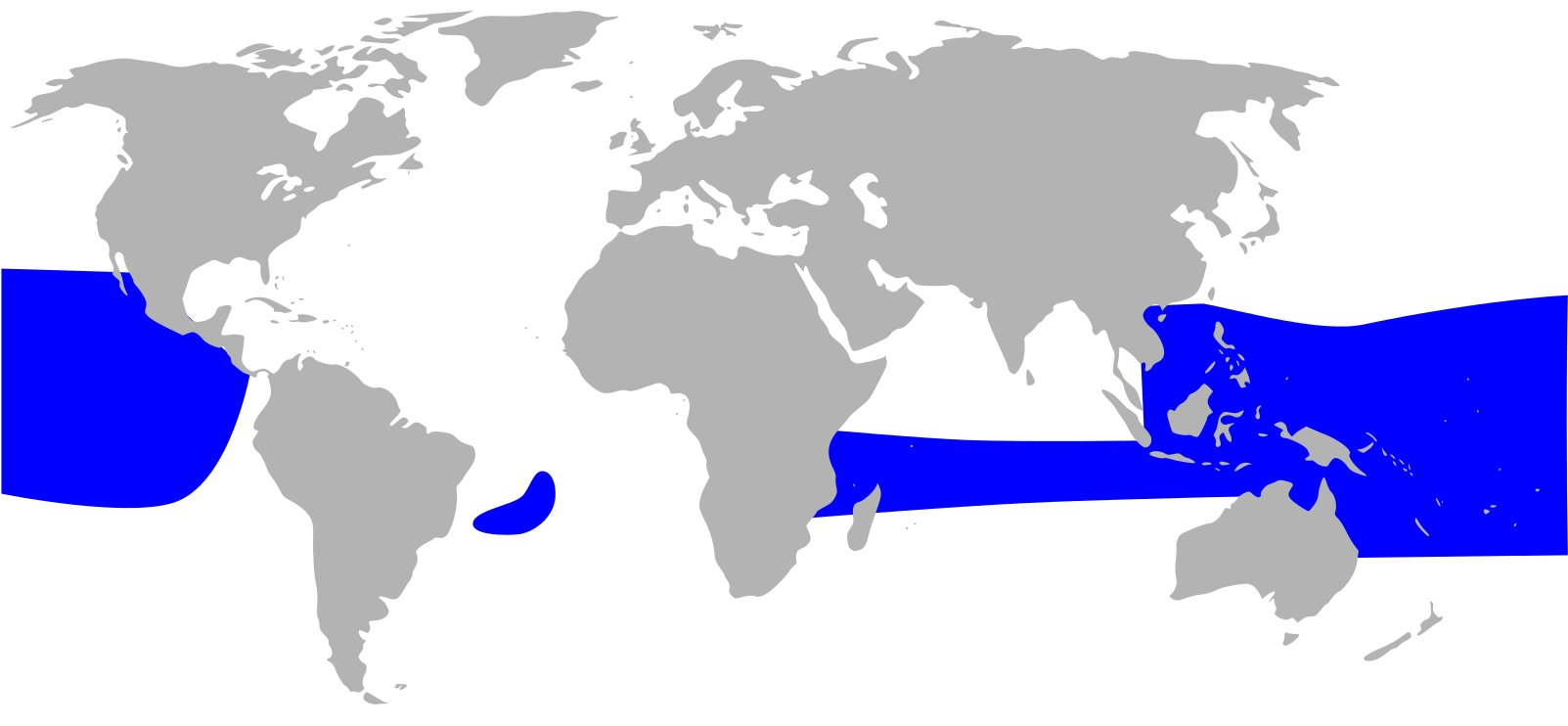
Seabirds live in a marine environment, typically feasting on fish that get too close to the surface. The great frigatebird, pictured above, is one such species of seabird. And like other seabirds, it's love of the water ends after a meal or two -- the great frigatebird can't swim. In the unfortunate event that it flies into the water and can't get out, it will, ultimately, drown.

For years, that's caused an interesting conundrum for researchers. The map below helps explain why: it shows where great frigatebirds can be found. What you'll see is that they cover a huge area -- and almost all of it is over water.

YOpCs03aus3oH_9Ph0hKNo6xtKwRa1zHZ9I_BssWta53DQyz12bxP0USRdf7miAcFfMditMbLFbNXWvo72Hx30eIZp-0p1u0EPegROHnug_iA4sp4d46i2uPVbEUJyVCQMRfEnwH6caNUvH_fhgWB_gBAxhpssRxnZV21mA=s0-d-e1-ft
To go from shore to shore over such large areas, well, that's a long flight. Some migratory flights can take weeks and even up to two months, and often those flights are entirely over the open seas. The question: If the birds are over water for that long, when -- and where -- are they sleeping?

For years, the theory was that frigatebirds slept, somehow, mid-flight. But until recently, that was, at best, a guess. In 2016, though, a paper in Nature Communications finally provided evidence that the theory was right. Take a closer look at the image above, which comes via this article from the Audobon Society's magazine. You'll see a shiny black bump in the middle of its back, positioned between its wings, and another black device on the equivalent of its forehead. Those items, combined, allowed researchers to measure the brain activity and the velocity of the monitored birds. Per that Audobon article, here's what they found:Rattenborg [the lead reseracher] and his team found it relatively easy to capture 15 of the birds to implant electroencephalographs (EEGs) into their skulls. Because EEGs measure electrical activity in the brain, the researchers were able to tell when the birds were awake or asleep. An implanted accelerometer clued them into how fast and in what direction the animals flew.

When they downloaded the data from the tiny devices a week later, the researchers found that while frigatebirds do sleep while flying, they sleep very little—about 45 minutes each day in short ten-second bursts, usually after dark. The sleep isn't quite the quality of the on-land sleep; per the Guardian, "in-flight sleep was also far less intense than sleep on land; the birds sacrifice sleep for vigilance, and incur a large sleep ‘debt’ during long distance flights, which they may compensate for once back on land," sleeping as much as 12 hours at a time. So if you're envious of their sleep-flying, don't be -- it catches up with them at the end. Then again, who wouldn't want to fly in their sleep?
 
  • Like
Reactions: BillM
The Surprising Way to Get Rejected

Apparently,

In 1968, novelist Jerzy Kosi?ski wrote his second book, Steps. It received a good amount of critical acclaim -- it won the 1969 National Book Award for Fiction, perhaps the most prestigious awards given for such works. But as books go, if you haven't heard about it, you're not alone -- Steps wasn't a commercial success -- and has, in many ways, been forgotten since.

Just ask Chuck Ross, another writer you probably never heard of.

Ross's career is non-descript, but not due to lack of trying. In the 1970s, he wrote a mystery novel in his spare time and shopped the manuscript around. Publisher after publisher sent him the same reply: thanks, but no thanks. Most writers would have moved on, but Ross's manuscript came with a trick of sorts. CNN explained:
[Ross] had put a little seal on the last few pages of the manuscript -- the pages that were the payoff to his story. It was intended to be a clever enticement; when the editors at the publishing houses got to the end, they would remove the little seal to read the climax of the book.

But when every publisher sent the manuscript back to him, with letters telling him why they didn't want his story, he noticed something:

The seals on the last few pages had not been broken. Not on any of the manuscripts.
Believing that publishers were judging a book by its cover, Ross tried a new experiment. In 1979, he typed up the first 21 pages of Kosi?ski's Steps and, without putting the original author's name on it (instead using the pseudonym Erik Demos) or putting a title on the piece. He sent it to more than a dozen publishers -- including the book's original publishing house. And again, he attracted nothing but rejection, despite the already-established quality of the manuscript. As Ross told the Museum of Hoaxes, "Evidently, Kosi?ski is not as good as Kosi?ski when Demos is the name on the envelope."

Ross wasn't done yet, though. A few years later, he re-keyed the script to Casablanca and sent it off to 217 movie studios, again with a false title and under the name of Erik Demos. (He also changed many character names to make the ruse less obvious.) Many rejected it outright -- they didn't accept unsolicited manuscripts -- and some didn't reply at all. Of the 64 who claimed to review the script, 33 correctly identified what they were reading. But some fell into the trap. Again, per the Museum of Hoaxes: "Thirty-eight agencies claimed to have read it, but rejected it. In other words, of those agencies that actually read the manuscript (or claimed to have), the majority did not recognize it as Casablanca, nor did they think the script was good enough to be worth representing."

And the last three? They offered to represent Ross and push his story forward. Oops?

Ross declined to go further -- he had already proved to himself that his rejection letters were not a completely accurate reflection of his talents. (And it's not like he could have cashed in on his slightly modified version of Casablanca anyway.)


To view this content we will need your consent to set third party cookies.
For more detailed information, see our cookies page.