
Random thoughts

a vip madical am for all


nener knew it was that bad in ASIA
esp for children

Experiencing interruptions? Find out why
The science of sugar | TechKnow


Published on May 1, 2017
The science of sugar - TechKnow

The latest World Health Organization data indicates that 1.9 billion people worldwide are overweight, with 600 million considered obese. Sugar, in the form of processed, high-in-sugar foods are largely to blame.

Scientists around the world are making a desperate plea to stop an epidemic of obesity. But now, new research goes beyond fat to reveal a risk that could be even greater.

TechKnow explores the science of sugar at the Department of Molecular Bioscience School at the University of California-Davis where cutting-edge research is being done. The project, headed by Dr Kimber Stanhope, put healthy young adults in their 20s on a highly controlled sugary diet for 10 weeks and then measured the effects of that added sugar.

TechKnow explores the correlation between sugar intake and heart disease in young adults.

To view this content we will need your consent to set third party cookies.
For more detailed information, see our cookies page.

diabetes

Diabetes affects over a quarter of Pakistanis l Al

Published on Nov 14, 2018
There are 422 million adults around the world who suffer from diabetes.
That figure has almost quadrupled since 1980, according to a World Health Organization report.
On World Diabetes Day, Al Jazeera's Natasha Ghoneim looks at how Pakistan is trying to contain spiralling rates of the disease.

To view this content we will need your consent to set third party cookies.
For more detailed information, see our cookies page.

Qatar joins global fight against diabetes, to work with US | Al Jazeera English

Published on Nov 14, 2018
Nearly 425 million people are affected by diabetes globally, according to the International Diabetes Federation. And the Middle East and North Africa (MENA) region has the second highest diabetes rate after North America and the Caribbean.
As we observe the World Diabetes Day, it becomes important to highlight the menace of the chronic disease, which is becoming a major cause of concern for the Gulf countries, particularly the United Arab Emirates, Saudi Arabia, Bahrain and Qatar.
Scientists in the United States and Qatar recently signed a new partnership for stem cell research. It's the first cell-therapy programme to tackle diabetes in the region, raising hope for a cure.

To view this content we will need your consent to set third party cookies.
For more detailed information, see our cookies page.


How Sugary Foods Are Making Us Fat
Journeyman Pictures

Published on Nov 17, 2014
Catalyst: Toxic Sugar - The previously unrecognised health impacts of high-sugar diets

Subscribe to Journeyman for daily uploads:

Today’s generation of eaters are the fattest the world has ever seen; there are now more obese people on the planet than undernourished. Is it really as simple as humans suddenly consuming much more fat than in the past? While the amount of fat we eat has stayed largely stable over the past few decades, scientists like Prof Michael Cowley and Prof Robert Lustig point out that sugar and processed carbohydrates are the main culprits for our recent obesity. Dr Maryanne Demasi investigates how our misguided eating habits have led us to become the fattest generation of humans in history.

ABC Australia - Ref 6284

Journeyman Pictures brings you highlights from the cutting-edge science series, ‘Catalyst’, produced by our long-term content partners at ABC Australia. Every day we’ll upload a new episode that takes you to the heart of the most intriguing and relevant science-related stories of the day, transforming your perspective of the issues shaping our world.

How Sugary Foods Are Making Us Fat
 
  • Like
Reactions: teddybaerli1
oh another take on it..re possible impending heatwave in our region this summer duh
consumers delight famed online shopping purchases x2
have 2 new cheap arse a/c equivalents as decided to opt for fear/paranoia ya'all live with/love over there

almost need to use one today damn

Shit finally completes 29-month journey towards fan


fan-1-667x375.jpg


Shit finally completes 29-month journey towards fan


correction incls
Trump
Netanyahu
MSB
Aung San Suu Kyi

others to be addedd as required


36653167343_0bcd3a14e6_k.jpg


Orangutans Are the Only Non-Human Primates Capable of ‘Talking’ About the Past


incredible idea


Instant Ocean

Originally built as a gateway to space colonization, Biosphere 2 has a new purpose: to breed supercorals strong enough to survive swiftly changing seas. First, scientists must revive the simulated ocean.

by Hannah Hindley • 1,900 words / 10 mins


  • Like
Reactions: teddybaerli1
wow
always been way of them nasties

6 tick-borne illnesses that will haunt your dreams tonight
Nominate someone for Grist 50 2019.
Nominate

×
gettyimages-1037951126-e1542326994897.jpg

Patrick Pleul / picture alliance via Getty Images
TICK TOCK
6 tick-borne illnesses that will haunt your dreams tonight
By Zoya Teirstein on Nov 16, 2018
daily dose of good news from Grist Subscribe To The Beacon

If you live in an area with a few trees and shrubs, you’re likely cohabitating with a network of bloodsucking, disease-ridden arachnids. That’s right, ticks are your next-door neighbors … except the diseases they carry aren’t neighborly at all.

On Wednesday, we were hit with a double whammy on these nasty little buggers. A committee submitted a report to Congress found that tick-borne illnesses are spreading to more people and present “a serious and growing threat to public health.” Take Lyme disease, an illness that’s caused by bacteria carried by blacklegged (AKA deer) ticks. The report found that over the past 25 years, the disease has increased by more than 300 percent in Northeastern states.

Here’s that second whammy: The Centers for Disease Control and Preventionannounced that the kinds of diseases ticks carry are growing in number as well. The CDC says 2017 was a “record year” for ticks and the freaky bugs they carry.

The Beacon The Weekly
Ask your climate scientist if Grist is right for you. See our privacy policy

In the U.S., there are currently 18 tick-borne illnesses recognized by the CDC, but researchers uncover more regularly that aren’t yet recognized by the agency. “The continued spread of ticks, the discovery of new tick-borne pathogens, and the spreading outbreak of human disease is a near certainty,” the committee report gloomily concludes.

Before we get into which new diseases you should be biting your nails over this year, there’s a big question worth answering: What’s to blame for this Great Tick-ward Expansion?

The answer is multi-faceted, but climate change plays a role. Warmer winters mean more ticks survive the cold season and can travel farther by hitching rides on deer, whose range expands in milder weather. Also at fault: exploding deer populations and human populations expanding into wooded areas. Here’s what new or rising illnesses you should be on the lookout for:

Alpha-gal
Ladies and gentlemen, meet the tick that can make you allergic to meat. Alas, this is not a prank. Lone star ticks, which were first discovered in the Southeast, have army-crawled their way into the Northeast, and their bite can trigger a serious allergy to red meat in humans. Not to mention, they hunt in packs like a gang of aggressive vampires. The cure to the allergy? Stop eating red meat, lol.

Heartland virus
Lone star ticks also carry a recently discovered illness called Heartland virus, which has a 12 percent mortality rate and causes symptoms like fever, diarrhea, and myalgia (muscle pain). Also no cure. Cheers, guys.

B. Miyamotoi
Blacklegged ticks have it all: They carry Lyme in addition to a host of other diseases, including a newly discovered infection called B. miyamotoi. Symptoms include fever, chills, sweats, fatigue, and more flu-like effects. The only real difference between B. miyamotoi and Lyme is that the former doesn’t come with a tell-tale rash. “The better to trick you with, my deer,” says a blacklegged tick, probably, rubbing two of its eight creepy feet together.

Powassan virus
The Powassan virus is a rare illness that causes fevers, confusion, and memory problems. It’s carried by blacklegged ticks as well as some mosquitos and groundhog ticks. Surprised to discover groundhog ticks exist? Same and I’m a real tick aficionado.

Bourbon virus
Pour yourself a stiff drink, because ticks might carry something called Bourbon virus, now (researchers don’t know if it’s ticks for sure, yet, let alone which ones carry it). The first reported case was in Bourbon County, Kansas, in 2014, and the poor guy who had it died. There have been a few other cases since, but that’s pretty much all we know so far.

Bonus tick
S.F.T.S.! It’s not a new acronym the youngsters are using. It’s a syndrome that causes fever and messes with your blood, and it’s carried by a tick called the Asian longhorned tick. Not to be confused with the Asian longhorned beetle, which has its own set of problems — you know what they say! The longer the horn the longer the problem (they don’t really say that).

An Asian longhorned tick infestation was first found in New Jersey in 2017, but the ticks have now spread to seven states in total. None of the ticks found in America so far are diseased, but, in other countries like Asia, the longhorned tick carries S.F.T.S, which kills 15 percent of infected people. Have fun trying to sleep tonight.

Does any of this mean you shouldn’t step outside anymore? Hell no! We can’t justhand the great outdoors over to the ticks. That means they win. And doctors, by the by, agree with me. I’m sure as heck not gonna let a bunch of hungry sesame seeds scare me out of living my life, and neither should you. For more information about how to avoid getting bitten by these mean bloodsuckers go here.

6 tick-borne illnesses that will haunt your dreams tonight
 
  • Like
Reactions: teddybaerli1
happy turkey day whenever that is USA
sounds like your Trump actually

eLQOhu_wWK3EgZAp9Gn-wr1HNC1UKXZAHlEh6g6M5igX4NcgfpVt7OmKTXjGKJWm4EsWaQQy5FgL-jaoIjalyTCYKgwJq-Dv8EUS1xo1OVewrmH2Ms40c0yVbDAnaxkhbs4QdpUA_chV9XlRF3ul9phTSc40j7N3BqNHzEjxxRyzcOG-ri62UV8=s0-d-e1-ft


In this 2017 photo, a wild turkey walks through a residential neighborhood in Brookline, Mass. (Collin Binkley/AP)

Hello, and happy weekend.

It’s almost Thanksgiving, so let’s talk turkey, shall we?

A wild turkey in the town of Ashwaubenon, Wis., has made quite an impact. As my colleague Antonia Noori Farzan explains in a deep-dive on a tom locals have dubbed “Smoke,” the bird works the same busy median each day, gobbles to folks like he’s got a message that must be spread, and is very, very adept at evading authorities' nets. He’s got detractors, but he’s also got fans, including thousands who follow his capers on Facebook and town residents who sport T-shirts reading: “I stand with Mayor Smoke.”

Smoke’s hardly the first turkey to make a splash — or to run from the cops. In Johnston, R.I., officials have also unsuccessfully used nets to try to capture a turkey who’s been gallivanting around town since summer. In Pittsfield, Mass., a turkey took the opposite approach, choosing instead tochase police in a cruiser; the department described the bird as “armed and delicious.” Perhaps that turkey took a cue from a peer in Colorado, which“aggressively” chased two sheriff’s deputies recently, per WPTV. Some turkeys, fortunately, seem to be more skilled at making connections with their area humans: In Medford, Mass., turkeys made news because people are not complaining about them this year.

Want to know more about wild turkeys in our midst? I wrote about them last year — check it out.

Thanks, as always, for reading. And happy Thanksgiving!
 
  • Like
Reactions: teddybaerli1
laugh
get this into you
science turkeys!

dont you jus Tlike hate me,no that i give a shit, stir sti stir

YeuaI5WjqW-1ZZdjorbTtfAWdpswL6_p8PIBOfQryVRjbKZuI1OUjoj9EHCmafTcr25cOEsTN1KaDWUK3JolUdSEeucuBPGoOSEopufcVJk2y9ewX-chmsV44gDilRr3s5Dy71QEf45LA3Bwq6OG6lzGpQuhz9zg-ss=s0-d-e1-ft
A silicon sphere similar to the ones created for the Avogadro Project. The spheres used in the project have been called “the roundest objects in the world” and were part of a competition to redefine the kilogram. Image courtesy of NIST


Happy Saturday, science turkeys!

You’ll want to gobble down this science news.


This week in science, we learned:

The way we weigh the world is about to change. On Friday, metrologists — people who study the science of measurements — and representatives from 57 nations gathered in a conference room in Versailles, France, to redefine the kilogram.The kilogram — anywhere in the world, for any purpose — is based on the exact weight of a golf-ball-sized chunk of platinum and iridium, stored under three glass bell jars in a vault in an ornate building outside of Paris. Accessing the vault requires three people with three separate keys. Despite all of this security, in the 129 years since the International Prototype of the Kilogram was forged, polished and sanctioned as an artifact of measurement, it seems to have lost a tiny amount of material, which means changes for the way we weigh pretty much everything.

Will the Food and Drug Administration’s ban on sales of menthol cigarettes and flavored cigars, along with other restrictions on e-cigarettes, reduce underage vaping and smoking?

Last Sunday marked a significant day in both medical and art history. It was on that day in 2006 that the Board of Trustees of the Thomas Jefferson University in Philadelphia agreed to sell a masterpiece, “The Gross Clinic.” The price was a jaw-dropping $68 million. Today, with an ever-more lucrative global art market, the history behind Thomas Eakins’ masterpieces are as important as ever.

Have Americans forgotten the history of this deadly flu?

The disaster years

The last two years have brought disaster after disaster for Americans across the country. A look at what we’re learning now:

As major fires blaze in California, science correspondent Miles O’Brien considers some of their causes, both human and meteorological. O’Brien has been filming a NOVA documentary on megafires and witnessed the Camp Fire not long after it began. He discusses the broader scientific context around why the seven largest fires in California history have occurred since 2003.

This week, special correspondent Cat Wise explored Pollocksville — a hard-hit, working-class town that is still struggling with Hurricane Florence’s aftermath. About half of the town's homes and businesses sat underwater for several days after the storm. Now, they’re wondering whether to rebuild. They face $500,000 in damaged infrastructure, and many didn’t have flood insurance because the riverside town wasn’t considered part of a flood zone.

Hurricane Harvey dumped 20 percent more rain on Houston last August than it typically would have. The culprit: climate change. And Harvey wasn’t an outlier. A new study published Wednesday reports that climate change intensified the rains of Hurricane Katrina, Hurricane Irma and Hurricane Maria by between 4 and 9 percent. The researchers predict that future warming could increase rainfall totals for the most extreme hurricanes and tropical cyclones by up to 30 percent.

At the height of the Zika epidemic in 2016, 10 percent of Puerto Rican women were testing positive for the disease. But when Hurricane Maria slammed the island in September 2017, crippling its health care system, the focus shifted to hurricane recovery, and labs no longer sent testing samples to the Centers for Disease Control and Prevention. On this week’s The Leading Edge, Beth Murphy takes a look at Zika virus in post-hurricane Puerto Rico.


The world is weird, and we love it

1-877-KARS4KIDS had a data breach. (TechCrunch)

How mammoths competed with other animals and lost. (Science News)

Orangutans are the only great apes — besides humans — to “talk” about the past. (Science Magazine)
 
  • Like
Reactions: teddybaerli1
Look, Watch

Here is the PBS NewsHour science video of the week:


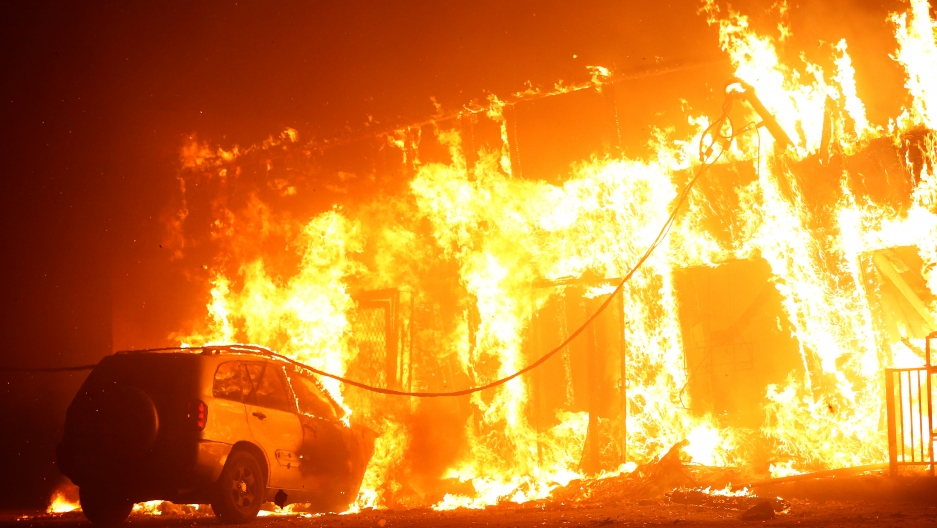
By most accounts, the “Camp Fire” has essentially wiped Paradise off the map. As of Friday, the 142,000-acre blaze had killed 63 people and more than 600 had been reported missing. At the other end of the state, a fire bigger than Philadelphia killed three people and destroyed 616 buildings.

These two “megafires” — the term for when a wildfire spreads across 100,000 acres — took many by surprise because they struck in November, which is typically a cooling off period for California’s wildfire season.

Why are these megafires happening now? Drought was a factor, but not the sole cause. It was a combination of a climate thrown into tumult — dry years mixed with rainy ones — and fires releasing more heat when they burn because of scorched vegetation. That’s also the key reason why wildfires have ravaged the American West in the last two years.

To learn what makes these megafires spread and ways to protect against them, the PBS NewsHour visited the National Fire Research Laboratory in Gaithersburg, Maryland. Regardless of whether they’re studying a house fire or the Camp Fire, one rule reigns supreme — even over temperature.Here’s how you can protect the inside and outside of your home from a fire.


iWant this tech

Better “nowcasting” can reveal what weather is about to hit within 500 meters. (MIT Technology Review)

What’s the next big thing in tech? It’s up to us. (Wall Street Journal)

A new test can predict IVF embryos’ risk of having a low IQ. (New Scientist)


Something to ponder this weekend

Why are young people having so little sex? (The Atlantic)

There's a giant crater the size of a city hiding under Greenland. (Popular Science)

Watch the Leonid meteor shower this weekend. (NPR)

To the turkey,
Nsikan Akpan, NewsHour science producer
 
  • Like
Reactions: teddybaerli1
Look, Watch

Here is the PBS NewsHour science video of the week:


By most accounts, the “Camp Fire” has essentially wiped Paradise off the map. As of Friday, the 142,000-acre blaze had killed 63 people and more than 600 had been reported missing. At the other end of the state, a fire bigger than Philadelphia killed three people and destroyed 616 buildings.

These two “megafires” — the term for when a wildfire spreads across 100,000 acres — took many by surprise because they struck in November, which is typically a cooling off period for California’s wildfire season.

Why are these megafires happening now? Drought was a factor, but not the sole cause. It was a combination of a climate thrown into tumult — dry years mixed with rainy ones — and fires releasing more heat when they burn because of scorched vegetation. That’s also the key reason why wildfires have ravaged the American West in the last two years.

To learn what makes these megafires spread and ways to protect against them, the PBS NewsHour visited the National Fire Research Laboratory in Gaithersburg, Maryland. Regardless of whether they’re studying a house fire or the Camp Fire, one rule reigns supreme — even over temperature.Here’s how you can protect the inside and outside of your home from a fire.


iWant this tech

Better “nowcasting” can reveal what weather is about to hit within 500 meters. (MIT Technology Review)

What’s the next big thing in tech? It’s up to us. (Wall Street Journal)

A new test can predict IVF embryos’ risk of having a low IQ. (New Scientist)


Something to ponder this weekend

Why are young people having so little sex? (The Atlantic)

There's a giant crater the size of a city hiding under Greenland. (Popular Science)

Watch the Leonid meteor shower this weekend. (NPR)

To the turkey,
Nsikan Akpan, NewsHour science producer
Thank you very much for all your efforts and those important infos you give to us. Just fabulous!
 
  • Like
Reactions: rbkwp
public service info and why not
notice often govts WW slow respose to matters affecting our health
like our NZs leaky homes saga
like that fire in the towers in Ehgland
like some thinking at the moment they should reintroduce asbestos in the USA


Ben McCanna/Portland Press Herald via Getty Images
Why Does The EPA Keep Delaying A Ban On Deadly Paint Removers?
In October 2017, Drew Wynne collapsed inside a walk-in refrigerator at his coffee business in North Charleston, S.C. By the time his business partner found him crumpled on the floor, Wynne was dead. He had suffocated on a chemical called methylene chloride.

The 31-year-old's death is one of dozens blamed on popular paint removers sold under the brand names Goof-Off, Strypeeze, Klean Strip and Jasco among others.

Since 1980 more than 50 deaths have been attributed to methylene chloride. In 2017, the EPA proposed a ban on it and a second chemical, N-Methyl-2-pyrrolidone -- yet the ban has never materialized.

Health and safety experts caution consumers to avoid using products containing these chemicals — and some retailers have said they will stop selling them. Read more about how the EPA ban has been repeatedly delayed.
 
love trees as well
save everything
humans are bastards for destroying many things,incl fellow humans
F' disgusting creatures we are


PHOTOGRAPH BY MARTIN EDSTR??M
ENVIRONMENT
Saving ‘Dragon's Blood Island'
The Indian Ocean archipelago of Socotra—which belongs to Yemen—is a place of oddities such as thousand-year-old trees whose bright red resin is said to have healing properties. It is also under threat from climate change, overdevelopment, and geopolitical conflict. Can the island be saved?


smile
no laugh, at the apparent goodness extreme super below, as compared to the microplastic infested t'bag drink i just had, i am told
and the likely palm oil cookie/biscit x3 i just had for lunch
dang, eco friendly BShitter am i ha


It's Time to Stop Paying for Pesticides With Our Health: Organic for All Must Become the Norm
t

What Are Prebiotics? A Detailed Look at Prebiotic Foods and Fiber
 
3 things you/we need to know
to co-exist with beings greater than us
will
you eat a turkey come that day
naughty you,mebeeee


14 Fun Facts About Turkeys
Read More ››

well
we better make it one to put you off your T day ha

Next Thursday may officially be called Thanksgiving, but you all know what it really is–Turkey Day! But how well do you really know Meleagris gallopavo, the wild turkey from which the domesticated version, the one likely to be on your plate, was derived?

1 ) Turkeys are more than just big chickens–more than 45 million years of evolution separates the two species.

2 ) The wild turkey was hunted nearly to extinction by the early 1900s, when the population reached a low of around 30,000 birds. But restoration programs across North America have brought the numbers up to seven million today.

3 ) There are six subspecies of wild turkey, all native to North America. The pilgrims hunted and ate the eastern wild turkey, M. gallopavo silvestris, which today has a range that covers the eastern half of the United States and extends into Canada. These birds, sometimes called the forest turkey, are the most numerous of all the turkey subspecies, numbering more than five million.


4 ) The Aztecs domesticated another subspecies, M. gallapavo gallopavo, the south Mexican wild turkey, and the Spanish brought those turkeys to Europe. The pilgrims then brought several of these domestic turkeys back to North America.

5 ) Male turkeys are called “gobblers,” after the “gobble” call they make to announce themselves to females (which are called “hens”) and compete with other males. Other turkey sounds include “purrs,” “yelps” and “kee-kees.”

6 ) An adult gobbler weighs 16 to 22 pounds on average, has a beard of modified feathers on his breast that reaches seven inches or more long, and has sharp spurs on his legs for fighting. A hen is smaller, weighing around 8 to 12 pounds, and has no beard or spurs. Both genders have a snood (a dangly appendage on the face), wattle (the red dangly bit under the chin) and only a few feathers on the head.

7 ) Studies have shown that snood length is associated with male turkey health. In addition, a 1997 study in the Journal of Avian Biology found that female turkeys prefer males with long snoods and that snood length can also be used to predict the winner of a competition between two males.

8 ) A turkey’s gender can be determined from its droppings–males produce spiral-shaped poop and females’ poop is shaped like the letter J.


9 ) Turkeys can run at speeds of up to 25 miles per hour and fly as fast as 55 miles per hour.

10 ) A group of related male turkeys will band together to court females, though only one member of the group gets to mate.

11 ) When a hen is ready to make little turkeys, she’ll lay about 10 to 12 eggs, one egg per day, over a period of about two weeks. The eggs will incubate for about 28 days before hatching.

12) Baby turkeys, called poults, eat berries, seeds and insects, while adults have a more varied diet that can include acorns and even small reptiles.

13 ) There is one other species of turkey, the ocellated turkey (Meleagris ocellata), which can be found on the Yucatan Peninsula in Mexico.


14 ) Benjamin Franklin never proposed the turkey as a symbol for America, but he did once praise it as being “a much more respectable bird” than the bald eagle.

Originally posted November 23, 2011

Read more: 14 Fun Facts About Turkeys | Science | Smithsonian
 

very sad,quite distresssing

CALIFORNIA INFERNO

THE CAMP FIRE DOSSIER
This is an OZY Special Briefing, an extension of the Presidential Daily Brief. The Special Briefing tells you what you need to know about an important issue, individual or story that is making news. Each one serves up an interesting selection of facts, opinions, images and videos in order to catch you up and vault you ahead.

LM-c2cNk-BVIytHi1u9mZCq2wyokgZDk_l2yvQzXEjnZbZM7ZiyCwBUC4OiBXzfWRmvBIcBg-TegcMlPxD4-3RVbe3BAfZOsIVh2E0LDVw=s0-d-e1-ft
WHAT TO KNOW

NZ0I5qahNsQy7dzRHFMSZUjwv2iBQDwFQta-_xg8b4Kq09OOBwPRWRKGOguuYHX-WLDYk02RzXEZm18UR7VHRzkukJ6gPgtiX43r7tfwVPyV6ydf8_ePmg=s0-d-e1-ft
What happened? Seventy-seven people have been confirmed dead in Northern California’s ongoing Camp Fire — now the state’s deadliest ever single wildfire — and 993 remain missing. While authorities are still investigating the cause and location of the initial blaze, which virtually incinerated the town of Paradise, more than 5,600 firefighters (and 24 helicopters) are busy battling it. President Donald Trump suggested the tragedy was a result of poor forest management, sparking a debate over whether bureaucracy, climate change or both are to blame.

Why does it matter? Having already destroyed more than 10,300 homes, the Camp Fire — which firefighters expect to extinguish by the end of the month — has now been at least 65 percent contained. But its effects are both devastating and long-lasting. At one point, some areas of Northern California experienced the worst air quality in the world due to the fires, prompting organization Mask Oakland to hand out more than 4,000 N95 masks over the course of four days. Some relief is expected by Tuesday in the form of up to four inches of rain, which could help clear the air of hazardous particulates, though that does little to change one daunting fact: Recovery from the fire will likely take years.

eGhja6QMjmq7o_XjOwQ7Nz7RARB85HWzWG_DGF5fp5kbZpGX7CEbBqw-yYpHcqjLYN0eUGle56rYtwOigTO9adls9nTbAZv-O8DwJChAzAY=s0-d-e1-ft
HOW TO THINK ABOUT IT

Bad management? Nearly two-thirds of California’s forests are federally managed, around 40 percent are in private hands and the remaining 3 percent are overseen by state and local agencies. Some experts have dismissed suggestions that any of these entities are to blame, noting that the initial fires started in open areas and were fueled by environmental conditions such as high winds and a lingering drought. But others say the surrounding environment — such as the thickness of forest, an issue that could be mitigated — should be taken into closer account when considering long-term fire prevention. Either way, one thing remains clear: In California, forest fires are only getting worse.

ZZLX-c2X8K9qsmjRBB-zmfkd5pGKHRY-GoChzB-e-pTSIZLLXk92FvqvadFH2_3mtWe9YWcrtr_FbCkk2T-9DvQmGZs62HCGXIO06Ug8XL8_EocjHkTFYQ=s0-d-e1-ft
A costly affair. Insurance analyses have estimated losses for the year at between $4 and $7 billion, which is far less than last year’s $13 billion. But California lawmakers, as well as strict state regulations, are likely to keep companies from hiking insurance rates to offset those costs. Meanwhile, the U.S. Forest Service estimates it’s spending 12 times what it did in 1985 to battle fires across the country. More troubling, though, is the human cost. In California, fatalities have been steadily rising every wildfire season: 2 in 2014, 9 in 2015, 8 in 2016, 47 in 2017 and 94 confirmed so far this year.

The bigger picture. The Camp Fire has surpassed what was previously the deadliest fire in California history: Los Angeles’ 1933 Griffiths Park Fire, which claimed 29 lives. But it’s far from the deadliest in U.S. history. In 1918, 450 people died in a Minnesota blaze, and in 1871 Wisconsin’s Peshtigo fire killed at least 1,500 — and perhaps as many as 2,500 people — while burning an area larger than the state of Rhode Island.

But the U.S. isn’t alone. Europe is another hotbed for forest fires, particularly around the Mediterranean. Greece experienced deadly blazes earlier this year, which killed 91 people. President Trump recently cited Finland’s successful efforts at firefighting, suggesting their track record is down to raking forest floors. Instead, observers say, it’s due to an effective early detection system and a vast network of forest roads that provide firefighters easy access while preventing fires from spreading. Still, forestry experts caution that Finland’s climate differs vastly from that of California’s.
 
_CNHwBajEPYmI7Rde3BfnOL4icZFxlWkp0u2S_tvmoWHgP7PfzfuRIHXbF7eP9BT-Gku9iCRqj3ohhbCekhKyfCNNOSCUZEFS624FirHVrE=s0-d-e1-ft
WHAT TO READ

California's Forest Management Isn't the Problem by Jennifer Lu in Popular Science
“There are two other key reasons why California is the perfect tinderbox. One is that the state has a growing number of people living in or near fire-prone areas. The second is that California has a naturally dry climate, made worse by climate change…”

California’s Paradise Lost by the Editorial Board in The Wall Street Journal
“Relentless winds and low air moisture make California’s fires harder to contain while development is putting more people in danger. But also fueling the fires is an overgrown government bureaucracy that frustrates proper forest management.”


P8kr97SWytIh2bn4H5H-4VwwGlBArYIPA-j4iUu9sy3m_Ev4lzlQRjtPe_H9oVr5AvHNCp289FrH5ysq7DAC1ZVBzQsIV4iBmiu6X6Hw7oBd=s0-d-e1-ft
WHAT TO WATCH

California Wildfires: Drone Footage Shows Paradise Devastation

“This is what is left of Paradise.”


Watch on BBC News on YouTube


Finnish President Niinist? Denies Discussing 'Raking' With Trump

“The fire situation in Finland is really uncomparable, completely uncomparable, with what’s going on in California.”


Watch on Euronews on YouTube


Gus076frhumooaX5cnIhkZ5wy7dHl5stK-8peJWkmMoNTHM4UPgrZwBKuNxw0OT8eFwPMpzKQDVV038uGFTWR09lW1AMKzlxduR36eQsmg=s0-d-e1-ft
WHAT TO SAY AT THE WATERCOOLER

Fighting fire with fire. Controlled burns, in which fires are intentionally set to thin out dense vegetation in forests and make them less susceptible to massive wildfires, have been used in the U.S. since before it was colonized, including more recently in California. But they’re expensive (though less expensive than fighting a real wildfire), and few people have the expertise to oversee the process — so the debate continues over whether controlled burns are a viable tactic.