Random thoughts

how about that
a religious miracle huh

Honey Bees on Notre-Dame’s Roof Survived the Fire
The three hives are located on a roof above the sacristy—around 100 feet below the cathedral’s damaged main roof

image: https://thumbs-prod.si-cdn.com/flZG...17-9238-4f17-9421-30d4a868324e/honey_bees.jpg

honey_bees.jpg

The insects do not have lungs, so smoke does not pose the same risk as it does to some other animals. (Avatarmin/Getty Images)
By Brigit Katz
SMITHSONIAN.COM
3 HOURS AGO
tore through Notre-Dame, French officials have been taking stock of the damage, trying to determine which of the cathedral’s precious objects survived. Late last week, some happy news emerged: at least some of the 180,000 honey bees kept in wooden boxes atop Notre-Dame’s roof appear unscathed.


Read more: Honey Bees on Notre-Dame’s Roof Survived the Fire | Smart News | Smithsonian
 
7 things we’ve learned about Earth since the last Earth Day
We continue to shape life on Earth, and threaten our survival, in unexpected ways.
By Umair Irfan Updated Apr 22, 2019, 8:00am EDTSHARE
iss059e006521__1_.0.jpg

Earth as seen from the International Space Station on April 3.
NASA
It’s Earth Day, and Google is celebrating with a Google Doodle of six amazing creatures to remind us we are not separate from nature (this year’s theme is Protect Our Species).

This Earth Day arrives at a sobering moment. The world is warming faster than ever. The oceans are rising. Thousands of migrants are fleeing environmental disasters. Taxpayers are paying billions to rebuild communities after climate-linked wildfires and hurricanes destroyed them. The Trump administration is unraveling policies designed to protect our health and environment at a stunning pace.

It is absolutely time to panic about climate change[/paste:font]
At the same time, new voices are helping us see and understand the urgency of the crisis before us, focusing us on what we need to do (i.e. get off fossil fuels). A fresh wave of young environmental activists are taking to the streets to strike for a safe climate. From classrooms to courtrooms to Congress members pushing the Green New Deal, an ambitious new suite of tactics are being deployed to defend the environment.

This Earth Day, it’s worth taking stock of what we keep learning about the spinning world we inhabit and how we’re responding to crises at hand. In keeping with the tradition started by former Vox writers Brad Plumer and Joseph Stromberg, here are seven of the coolest, most intriguing, and most alarming things we’ve learned about the Earth since the last Earth Day.

AP_19074418784526.jpg
Nasief Manie/AP
1) Kids today face a truly frightening climate future — and they’re mad as hell at adults for neglecting the problem
Many people under the age of 18 right now may be around to see the end of the century. And a growing number of them are not pleased with the climate they’re inheriting. Our current trajectory puts the planet on course to warm by 4 degrees Celsius by 2100, creating a world that will be devastated by disasters, droughts, disease, and food shortages.

In March of this year, students in more than 120 countries went on strike from school to demand action on climate change. These climate strikes are part of a youth-led climate activism movement, with another global strike planned for May 24. Here’s Irene Kananura of Kampala, Uganda who was striking this past Friday in the heat:

he #FridaysForFuture strike movement began when Greta Thunberg, a 16-year-old from Sweden, began skipping school and picketing outside the Swedish parliament to protest her government’s inaction on climate change in August.

She has since become something of a global ambassador for youth anxieties about climate change, and has pressured European Commission President Jean-Claude Juncker to commit 1 trillion Euros to fight climate change. “Our house is on fire,” she said in a January speech at Davos. “I don’t want you to be hopeful. I want you to panic. I want you to feel the fear I feel every day. And then I want you to act.” She and other young people show no signs of letting up the pressure.

2) Plastic is increasingly not fantastic
Whales washing ashore filled with plastic have become distressingly familiar sign of the immense amount of plastic we’ve allowed to wash into the ocean. A pregnant sperm whale was found with 49 pounds of plastic in her stomach along the coast of Sardinia, Italy earlier this month. In March, a Cuvier’s beaked whale was found vomiting blood off the coast of the Philippines. It died a few hours later, and 88 pounds of plastic waste were discovered in its stomach.

Every year, we let roughly the mass of the Great Pyramid of Giza in plastic to flow into the ocean, where it breaks down into small chunks or particles and accumulates in sea animals large and small.

GettyImages_1126739731.jpg

Egrets fly over plastic waste in a dump in Aceh, Indonesia.
Chaideer Mayhyuddin/AFP/Getty Images
We only recycle about 9 percent of the plastic we produce, and even that tiny fraction is under threat. China, the world’s largest recyclable plastic importer, began to slash its intake last year. The move has rippled throughout the world. It’s already forced some recycling programs in the United States to shut down entirely.

Why Starbucks, Disney, and the EU are all shunning plastic straws[/paste:font]
Yet addressing the plastic crisis is becoming a bigger policy priority, and more countries are nowbanning single-use plastics — including plastic cutlery and straws. Meanwhile, the race is on to develop new environmentally-safe materials, to repurpose existing plastics, and to harness bacteria to digest our waste.

3) Life is so much heavier than we thought
Have you ever contemplated how much every plant, fungus, bacterium, insect, bird, fish, and mammal all put together would weigh? Maybe not. But last year, scientists did just that, calculating the total mass of all life on earth as we know it.

Vox’s Javier Zarracina and Brian Resnick put together a helpful visual of the mass of all life. A key insight is that the some of the smallest creatures carry the greatest weight. The mass of bacteria is 1,100 times more than the mass of all humans put together, for example.

slice1.jpg

Each large block of this tower represents a gigaton of life, and the blocks are grouped into broad kingdoms.
Javier Zarracina/Vox
But
 
despite the mind-boggling mass of every maple, elephant, cricket, worm, mackerel, dandelion, and sparrow on Earth right now, there used to be a lot more. Poaching, deforestation, and other forms of human activity have dramatically reduced the mass of life on Earth. The mass of land mammals, for example, is one-seventh what it was before modern humans walked out of the African savannah.

4) Frogs are croaking from a nasty fungus
Frogs are often sentinel species that scientists study closely because they are especially sensitive to changes in their environment, like temperature, rainfall, habitat loss, and invasive species. Sentinel species also serve critical roles as predators and prey in their habitats. Their fates are harbingers of broader shifts in the environment and they are often the first to show signs that changes are afoot.

Which is why scientists were so alarmed by the spread of a deadly amphibian fungus,Batrachochytrium dendrobatidis, also known as the amphibian chytrid fungus or Bd. Scientists previously reported that this single pathogen has led to the decline or extinction of 200 frog species. But a new study out in March showed that the die off has been even worse than they realized.

GettyImages_74263027.jpg

A Corroboree Frog walks across the gloved palm of reptile keeper. Only about 200 Corroboree frogs exist in the wild in their natural habitat of the Kosciuszko National Park in New South Wales. The frogs are threatened by the amphibian chytrid fungus.
Ian Waldie/Getty Images
Researchers reported that Bd has driven 90 frog species to extinction and forced another 124 to decline in numbers by more than 90 percent. This population crash has only been going on for about the last 50 years.

While the fungus is deadly on its own, humans have aided its spread around the world. The disease is hard to eradicate, but there is some evidence that the pace of decline is slowing down.

5) Life is disappearing, appearing, and evolving right in front of us
The World Wildlife Fund reported that vertebrate populations have declined by a jaw-dropping average of 60 percent since 1970. That includes birds, mammals, fish, reptiles, and amphibians.

Yet even as species disappear, we do occasionally discover new ones. Scientists found five new frog species in Madagascar, for example. It’s a regular reminder that we still don’t fully grasp all the nuances of life on earth, even as we unwittingly extinguish it.

Screen_Shot_2019_04_19_at_5.42.44_PM.png

One of the new frog species discovered in Madagascar.
PLOS One
But perhaps even more intriguing (and disturbing) is that we are changing life too. Researchers reported this year that as climate change raises average temperatures, sea turtles are experiencing a dramatic change in their sex ratios. Temperature is a major variable in determining the sex of a reptile, and in one species, scientists found that female baby sea turtles now outnumbered males 116-to-1. It’s a development that could herald a population crash among turtles.

6) We have just over a decade left before the best-case scenario for global warming passes us by
The Intergovernmental Panel on Climate Change, a group of the world’s top scientists convened by the United Nations, put out a stark report last year highlighting how little time we have left to limit global warming to 1.5 degrees Celsius, the most ambitious goal under the 2015 Paris climate agreement.

The key finding is that if we want to hit this target, we have to cut global greenhouse gas emissions in half compared to where they are now by 2030. By 2050, we would have to reach net zero emissions, and after that, we would even have to start withdrawing carbon dioxide from the atmosphere.

Otherwise, the window to 1.5 degrees Celsius closes, and we lock ourselves into more warming, which will lead to more sea level rise, more devastating extreme weather, mass migrations, and expensive declines in the global economy.

GettyImages_1041441948.jpg

Workers uses farm machinery to navigate floodwaters from the Waccamaw River caused by Hurricane Florence in Bucksport, South Carolina.
Sean Rayford/Getty Images
Despite these findings, we’re far off track and only getting farther. Global carbon dioxide emissions hit an all-time high in 2018. Atmospheric carbon dioxide levels crossed a record 411 parts per million, the highest levels since humans have existed. In the United States, energy use hit a record high and greenhouse gas emissions started to rise again in 2018 after years of decline.

That said, we do know what we need to do to accelerate progress in fighting climate change, from pricing carbon dioxide to eating less meat to supporting public officials who will advance critical policies. The IPCC report also provided goal posts of the Green New Deal, a far-reaching proposal for the United States to take the lead in fighting climate change.

7) A coming verdict on our right to a safe climate
A wave of lawsuits hinging on damages wrought by climate change gained momentum over the past year. Interestingly, climate science isn’t what’s up for debate in these climate lawsuits.

Rather, the key fights are over the legal rights to a safe climate and whether parties are owed damages from those that contributed to the problem.

In one set of cases, children and young people are suing the federal government for profiting off leases to fossil fuel extractors on public lands despite knowing the damages caused by rising average temperatures.

download.jpeg

Earth Guardians Youth Director Xiuhtezcatl Martinez, one of the plaintiffs in the Juliana v. US climate lawsuit, speaks outside the US Supreme Court in 2017.
Robin Loznak/Our Children’s Trust
In another set of lawsuits, cities, states, and local governments are suing oil companies for posing a public nuisance. The argument is that fossil fuels produce heat-trapping gases, which in turn cause problems like sea level rise that threaten valuable shorelines.

At stake are billions of dollars in liability for some of the largest and most powerful institutions in the world. And the cases could set precedents that stand for generations. These lawsuits are now working their way through courts, in the United States and in other parts of the world. The outcomes of these cases are critical, but uncertain.

7 things we’ve learned about Earth since the last Earth Day


 
  • Like
Reactions: Martin19_88
Sports are the ultimate reward for passion. Think about it, your team loses does anything bad actually happen? Of course not so you can give 100% passion and nothing bad will happen. That’s the only endeavor in life that can happen.
 
GREAT
FNQ is far north Queensland
Australia for those who may not know
just as C.U in.N.T. is the Northern Territory Australias advertising slogan
cant beat an Aussie off


Mountaintop rescue mission in FNQ's Wet Tropics to save threatened plant species
ABC Far North
By Brendan Mounter
Updated April 22, 2019 10:58:45

PHOTO: Mount Lewis in far north Queensland is home to about 70 endemic plant species. (ABC Far North: Brendan Mounter)

RELATED STORY: Death threats, protests and political agendas — how Queensland's Wet Tropics were saved
RELATED STORY: Climate change is driving this possum towards extinction
RELATED STORY: Flying fox decline signals dire warning for Tropics in the grip of climate change

MAP: Mossman 4873
Botanists have embarked on a mountaintop rescue mission in far north Queensland's Wet Tropics World Heritage Area to collect and record plant species at risk from climate change.

Key points:
  • Climate modelling suggests the habitat of endemic plant species in the Wet Tropics will drastically decline within as little as 15 years
  • Target species including tiny orchids and native rhododendrons will be collected and propagated in botanic gardens
  • Attempts will be made to build a seed bank of the plant species so there is a back-up collection of seeds


The mountain ranges of the far north are home to about 70 endemic species that rely on cooler climates at 1,000 metres above sea level.

Australian Tropical Herbarium director Professor Darren Crayn said climate modelling suggested their habitat would decline drastically.

PHOTO: Professor Darren Crayn is leading the five-year mountaintop rescue mission. (ABC Far North: Brendan Mounter)


"Climate modelling now predicts drastic habitat loss from the highlands within as little as 15 years, with droughts being longer, hotter, drier and more frequent," Professor Crayn said.

"Lowland species might be able to migrate to favourable niches elsewhere, but these mountaintop species may already be at their limits.

"They can't go up as the climate warms — they're running out of space and they're running out of time."

Over the next five years scientists, together with Western Yalinji Indigenous rangers, will collect target species including tiny orchids, huge trees and Australia's only native rhododendrons from Mount Lewis, near Mossman.

The species will be distributed to subtropical and cool-climate botanic gardens in Queensland, New South Wales and Victoria, where they will be propagated in conservation collections and used in research and education.

PHOTO: Mount Lewis's endemic plant species rely on the cooler climates 1,000m above sea level.(ABC Far North: Brendan Mounter)


"The aim is to secure the most severely threatened tropical mountaintop species in well-managed, living collections with microclimates as close as possible to their original habitat," Professor Crayn said.

Royal Botanic Gardens scientific officer Dr Karen Sommerville said once the plants were safely cultivated, experimental work would assess the physical limitations of the species, while the Australian PlantBank would attempt to build a seed bank of the species.

"We'll test them to see if they'll tolerate drying and … we'll test them to tolerate freezing," Dr Sommerville said.

"If they do, we can store them in the seed bank and we can have a back-up collection of those seeds.

"It's an insurance program to guard against extinction of the species.

PHOTO: If the plants tolerate drying and freezing they will be stored in a seed bank. (ABC Far North: Brendan Mounter)


"If the species happen to disappear on the tropical mountaintops then we'll at least have a back-up collection that we can have to maintain them in botanic gardens if nowhere else."

Australian National Botanic Gardens seed biologist Dr Lydia Guja said the job of ensuring the survival of the tropical seeds and plants remained a challenge.

"There hasn't been a lot of research on how to keep the seeds of these species alive in conservation," Dr Guja said.

"Due to their origins high in the mountains, the seeds may not survive the processes of drying and freezing that are typically used in seed banking.

"Once we've found ways to conserve these seeds, we'll look at germination requirements to better understand what impact climate change might have on their germination.

"If we can understand the capacity of these seeds and plants to germinate and grow under a broad range of conditions we will know what we need to do to grow back-up plants for future generations."

PHOTO: The Wet Tropics are World Heritage-listed for their natural heritage values. (ABC Far North: Brendan Mounter)


The Wet Tropics of far north Queensland were inscribed on the World Heritage Register in 1988, due to the region's immense natural heritage values.

"These mountaintop ecosystems are unique, not just nationally but globally; many of the species, both plants and animals, are found nowhere else on Earth," said Dr Sandra Abell, Wet Tropics Management Authority principal scientist.

"The best conservation outcome is to protect species in their original habitat but the modelling tells us we're unlikely to have that option.

"So, this is Plan B: act now to secure the most diverse 'captive' collection we can," she said.

The five-year project is funded by a $500,000 grant from the Ian Potter Foundation and $50,000 from the Wet Tropics Management Authority.

PHOTO: The habitat of Mount Lewis, near Mossman, is being threatened by climate change. (ABC Far North: Brendan Mounter)


Scientists in uphill battle to preserve rare tropical mountaintop plant species
 

Aw shucks! Can oysters clean up New York’s harbor?

Read now
Try the Monitor Daily – our premium digital subscription – free for one week. Receive our best stories each weekday evening.
See what's included
No credit card required.

GMO could bring back the American chestnut. But should it?


NO NO NO
- i said

stop nterferring and likely F'kong up many things
 
always welcome Harry, no doubt re that
your wife as well of course
country needs royalty

Prince Harry attends public event as royal baby wait goes on
02:14, Apr 26

1556201869921.jpg


1556201869921.jpg
 
world malaria day


How Do Mosquitoes Taste DEET? Hint: It's Not With Their Mouthparts
It's the only repellent that drives mosquitoes away when they come in contact with it. A new study has a theory about why that is.

World's First Malaria Vaccine Launches In Sub-Saharan Africa
It took more than 30 years to develop. The hope is it will eventually save tens of thousands of lives each year. But there are a few issues.

Check out this Twitter thread of other stories from Goats and Soda for World Malaria Day.
 
Sweet talk and laughter — German sayings involving forests and trees
Germans are known for their love of forests, and celebrate Arbor Day annually. They also have a host of wonderful sayings and phrases revolving around forests and trees, with one that involves shouting into the woods

  • 48228796_303.jpg


    DON'T BE ALONE IN THE WOODS: GERMAN FOREST IDIOMS
    Germans and the forest
    The Germans' relationship to the forest is a long-standing love affair. Not only are the woods a dominant theme in German art and literature — appearing in the works of Goethe and Caspar David Friedrich alike — the forest also holds a special place in the hearts of many Germans. That adoration for the woods has filtered into the language: "Wald," pops up in numerous German phrases.

Meet The Germans series to find more about German culture, language and lifestyle.


DW RECOMMENDS
 
For the first time EVER I have rodents in my house!
That would have never happened when Shithead was alive.
Not even Johnny Death came in the house when Shithead was alive.

This horseshit won't stand.
 
NEWS
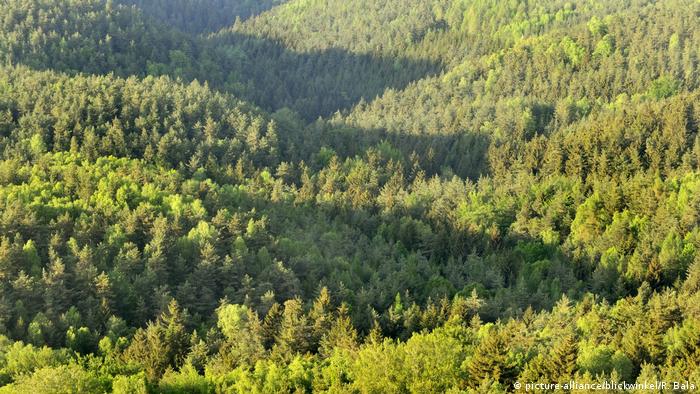
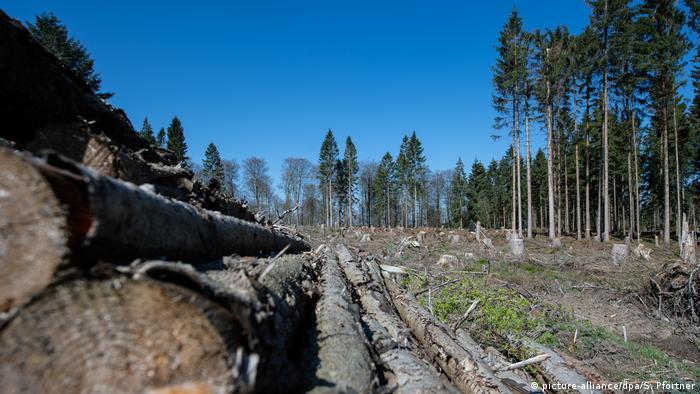
Storms and drought destroy thousands of acres of German forests
Drought and storms are decimating Germany's forests, causing an estimated €2.5 billion in damage in 2018-2019. Some 160,000 football fields worth of forests will need to be replanted, the government has estimated.


From January 2018 to March this year, 114,000 hectares (281,700 acres), or about 1% of Germany's forested area, were damaged from storms and bark beetles, which thrive during periods of dry weather.

Read more: German forest fire risk spikes amid high temperatures, drought

Reforesting the lost area could take years, the government said in response to a parliamentary inquiry from the opposition Free Democratic Party (FDP) that was published Friday in the daily Rheinische Post.

According to forecasts, 2019 may bring further warm and dry weather. Pine forests are particularly susceptible to bark beetle infestation during droughts.

  • 48228796_303.jpg


    DON'T BE ALONE IN THE WOODS: GERMAN FOREST IDIOMS
    Germans and the forest
    The Germans' relationship to the forest is a long-standing love affair. Not only are the woods a dominant theme in German art and literature — appearing in the works of Goethe and Caspar David Friedrich alike — the forest also holds a special place in the hearts of many Germans. That adoration for the woods has filtered into the language: "Wald," pops up in numerous German phrases.

Forestry industry takes a hit
 
The world's largest collection of ocean garbage is growing.

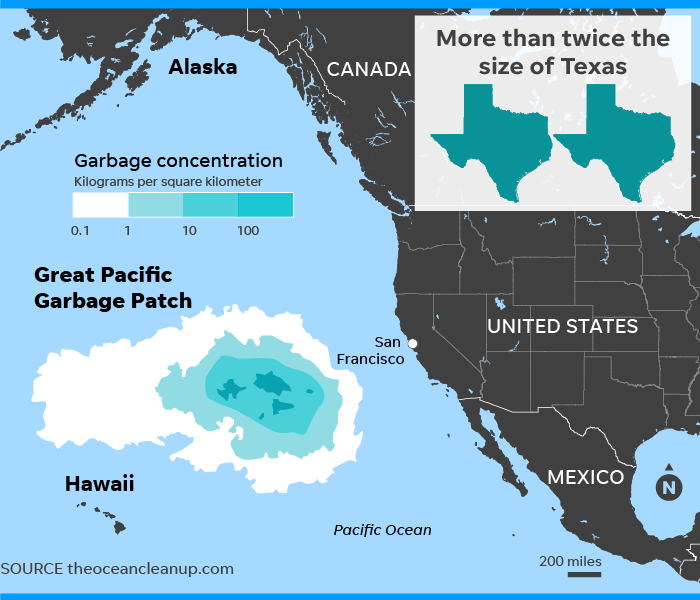
The Great Pacific Garbage Patch, a collection of plastic, floating trash halfway between Hawaii and California, has grown to more than 600,000 square miles, a study found. That's twice the size of Texas.

Winds and converging ocean currents funnel the garbage into a central location, said study lead author Laurent Lebreton of the Ocean Cleanup Foundation, a non-profit organization that spearheaded the research.

First discovered in the early 1990s, the trash in the patch comes from around the Pacific Rim, including nations in Asia and North and South America, Lebreton said.

The patch is not a solid mass of plastic. It includes about 1.8 trillion pieces and weighs 88,000 tons — the equivalent of 500 jumbo jets. The new figures are as much as 16 times higher than previous estimates.


636572386247113311-032118-great-garbage-patch-Online.png