Random thoughts

pgfoNL55rRiwxLAedfpQrx0VxlbRmDXH-yya9SnoUSMZDbSPy6fbzA1seXhPmGJ6sZefiVNAvDpUaRtTB5ZbH3VYkzwc1kYZkkRoJwkTfL7M1c-NWotdf6EwqiKfzSRArw=s0-d-e1-ft


be even more piseed off if the thickos mamed there boy xyz123 smile


What kind of assholes would name a daughter ‘Abcde’?
 
would add thats an obvious we should be aware of
dont think a sensible reasonable person would blatantly/ignorantly even,blame any occcurence on GW/CC


however
by the same token, when an adamant ignorant denier expects others to be looking at its beliefs as unchangeabe gospel, no thanks
and kids wont be fooled by such nonsense
some supposed adults i would say yes


"We've had an unusual week, which we haven't got to the bottom of, and it's fair to say it's been an entirely unusual year," Dr Karen Stockin, a marine mammal scientist based at New Zealand's Massey University, told AFP news agency after the latest mass stranding.

"I suspect a lot of that has been driven by the warmer sea surface temperatures that we're seeing at the moment."

She explained: "That's likely affecting where the prey is moving and as a consequence we're seeing prey moving and [whale] species following."

Mass pilot whale stranding at Rakiura/Stewart IslandPhoto: DOC
New Zealand's summer begins today and Dr Stockin warned that there could be more beachings to come.

"We're just going into stranding season now, this is only the beginning of it and we're very mindful of the fact that this a very busy start," she said.

While Dr Stockin said that global warming may be playing apart in the rising sea temperatures, most experts said that it was important not to jump to conclusions about the role of humans in these cases.

"Pilot whales have probably been stranding in New Zealand since before people lived there," Dr Ingram said. "It's probably not anything to do with what humans have done."

"It's a very dynamic ecosystem that these animals are in, so I would be very cautious in making any connection between these examples and climate change."
 
laugh
could be a truth in that, brought two cheaparse China made fans for a/c
possible heatwave NZ considering what the rest of the world went thru last year huh
no money like family who have flash homes and heat pumps or equivalent a/c m/cs ha
we will see

incidentlly
former abode 1 door
this has 3
but if expectation is 1/2 correct be heat comming thru those 3 doors not draft huh
sooner fans circulating air than enclosed inside a car like atmosphere not wanting to venture out, be-damned
- full disclosure
- he said


How Climate Change Is Ruining Our Indoor Air

It would take an unreasonable amount of plants to balance rising CO2 levels being found at home, school, and work
images
 
Maybe they like a bit of human massage, get some water splashed on their faces by another animal. They're clearly into inter-species fun! Probably from the DPSG (Dolphin Penis Support Group).

Just kidding though, it's fucking weird.
 
laughing
3 doors open 2pm NZT
not even summer yet,well daylight saving supposed to signify the official govt summer months, but get Fkd
another week or two maybe
dec/jan/feb,my book


Mount Everest Region, World's Highest Glaciers Are Melting, Receding

In this photo essay, the editor of the Nepali Times describes the dramatic changes underway in the ice and snow of the Himalayan Mountains.

BY KUNDA DIXIT, NEPALI TIMES
NOV 26, 2018
This photo essay was shot and written by Kunda Dixit, editor and publisher of theNepali Times, and first appeared in that publication.

For many tourists trekking to Mount Everest Base Camp, the trip is an adventure
of a lifetime. The thin clear air, stark landscape and ice-tipped peaks pierce the inky sky providing Instagram backdrops.

However, what is stunning scenery to tourists is for climate scientists an apocalyptic sight. They see dramatic evidence all around of a rapidly warming atmosphere.

Visitors returning to the Everest region after many years will notice changes in the landscape: large lakes where there were none; glacial ice replaced by ponds, boulders and sand; the snowline moving up the mountains; and glaciers that have receded and shrunk.


All these features are visible from ground level right from the start of the trek in Lukla. The banks of the Bhote Kosi, part of the river system that drains the slopes of the Himalayas in Nepal and Tibet, still bear the scars of a deadly flash flood in 1985 that washed off a long section of the Everest Trail and the hydropower plant in the village of Thame. The flood was caused by an avalanche into the Dig Tso, a glacial lake.

Further up, near the village of Tengboche, the Imja Khola bears signs of another huge glacial lake outburst flood that thundered down the western flank of Ama Dablam in 1977. And below the formidable south face of Lhotse is Imja Tso, a lake 2 kilometers long that has formed and grown in the last 30 years. It does not exist on trekking maps from the 1980s. All these lakes were formed and enlarged as a result of global warming melting the ice.

imja-tso-1000_kunda-dixit.jpg

Imja Tso, a glacial lake, did not exist on trekking maps 30 years ago. Today it is 2 kilometers long and 1 kilometer wide. Credit: Kunda Dixit/Nepali Times

"When I look at the Nepal Himalaya, we can see this is global climate change impact on fast-forward," said Dipak Gyawali of the Nepali Water Conservation Foundation and the Nepal Academy of Science and Technology.


Green and blue meltpools on the North Ama Dablam Glacier, where the vanishing icefall has exposed the eroded bedrock below. Credit: Kunda Dixit/Nepali Times


The Lobuje Icefall is now a hanging glacier, having retreated above the cliff. Credit: Kunda Dixit/Nepali Times

The terminal moraine of the Khumbu Glacier looms 400 meters above Dughla, a rest stop for climbers. This is the debris bulldozed down from Mount Everest and surrounding peaks over millions of years and represents the extent of the glacier's advance in the last Ice Age. Today, the surface ice on the world's highest glacier is all but gone due to natural and anthropogenic warming.


Khumbu Glacier, the world's highest glacier, has retreated as the planet has warmed. Its lower portion is largely covered by debris. Credit: NASA Landsat 8 image by Jesse Allen and Robert Simmon

For a dramatic glimpse of how global warming is changing the Himalayan landscape, there is nothing like the aerial perspective. The barren beauty foretells of a time when this terrain will be stripped of much of what remains of its ice cover.


The Khumbu Icefall carries debris and ice from the Western Cwm to the Khumbu Glacier, 1,000 meters below. Credit: Kunda Dixit/Nepali Times

The Khumbu Icefall funnels ice from the Western Cwm below Everest, Lhotse and Nuptse to the glacier below. The ice here has receded at an average of 30 meters per year in the past 20 years, but it has also shrunk vertically, losing up to 50 meters in thickness. Everest Base Camp was at 5,330 meters when Sir Edmund Hillary and Tenzing Norgay climbed Mount Everest in 1953; today it is at 5,270 meters.


A map shows base camp and how a key climbing route up Mount Everest changed after a deadly avalanche in 2014. Credit: Gregory Leonard, with data by Digital Globe and Mark Fahey/USGS, via NASA

The glacier is also getting flatter: the darker debris makes the ice beneath melt faster near Base Camp, but the thicker layers of boulders and sand further down insulate the ice. Glaciologists say this flatter profile means the ice moves slower, leading to more ponding and more rapid melting of the ice underneath.

The velocity of the glacier is about 70 meters per year at Base Camp, and it slows to about 10 meters per year further below. It's zero at the terminus at 4,900 meters. This means the ice is decelerating as it is squeezed, and the pressure is being released by the melting of the ice mass.

khumbu-glacier-900_kunda-dixit.jpg

Khumbu Glacier is receding at about 30 meters per year and shrinking: Base Camp is now 50 meters lower than when Sir Edmund Hillary and Tenzing Norgay climbed Mount Everest in 1953. Credit: Kunda Dixit/Nepali Times

Researchers monitoring the supraglacial ponds say their area has grown by 70 percent in the past 10 years alone. The ponds are fringed by ice cliffs and caves that accelerate the melting. The melted ice has carved an outflow channel through the left lateral moraine, so there is no large glacial lake on the Khumbu like elsewhere in Nepal.

Scientists conclude that the Khumbu Glacier is not about to vanish, and the Icefall is not going to turn into a waterfall any time soon. However, the permanent ice catchment of the glacier above 6,000 meters could start to deplete under a worst-case scenario of 5 degrees Celsius warming.

In Mount Everest Region, World's Highest Glaciers Are Melting, Receding

 
oh crap
i think 3/4s of the problem is yes this/no that
changes at whim,maybe 3xs a year huh, creating stress
and as we know

STRESS KILLS

Digging Deeper
How much protein do you really need?
The protein industry is booming and is on track to sell more than $12 billion in products — bars, powders, pills and more — this year. Protein is critical for every cell in our body: nails, hair, bones and muscle. But do we really need all of this supplemental protein? Registered dietician Angela Pipitone says: "The typical American diet is a lot higher in protein than a lot of us think." Too much protein can cause cause nausea, headaches and fatigue; it also can make kidneys work harder, a problem for people with kidney disease. The bottom line: You may need protein supplements if you're an extreme athlete, recovering from injury or are older than 60. To get it, Pipitone suggests adding eggs and meat products to your diet.
 
45015661_303.jpg


we are a sad species no doubt

Dirty oil
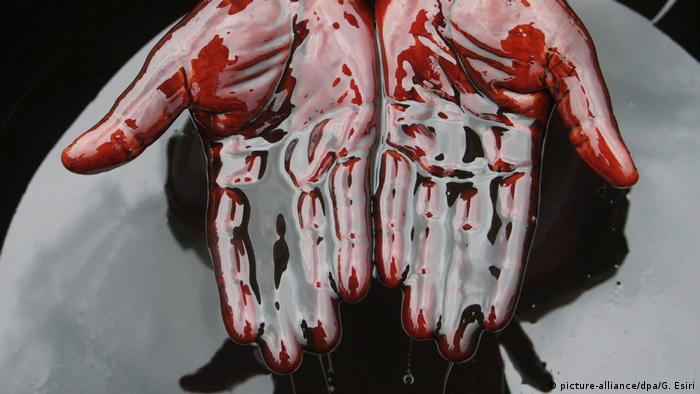
A protester's hands covered in crude oil during a 2011 protest against Royal Dutch Shell after pipeline spills in Nigeria, in 2008 and 2009. Shell allegedly ignored advice to replace the outdated Trans Niger Pipeline, which ruptured and inundated villages in Ogoniland with thousands of barrels of oil. Anti-pipeline movements have been around for decades, and are joining up across the globe
 
LAUGH
3rd time theyve put this out there
said before theyre fascinated with there CC article
apart from there own style of conning you to buy a subsciption ha

You've got 4 more free WIRED articles this month!
Inbox

WIRED
December is shaping up to be a busy month, with big headlines on climate change, genetic editing, and Russian interference in the 2016 election. Oh, and it’s gifting season. It’s easy to feel overwhelmed, but WIRED has your back—and lucky for you, you have four more free articles to read this month! Read on for our biggest stories, best deals, and more.

Interested in reading everything WIRED has to offer? Subscribehere


SICK PLANET
The Climate Apocalypse Is Now, and It’s Happening to You
BY ADAM ROGERS
Goodbye, Arctic. Hello, heat stroke and asthma attacks. New climate reports connect the dots between predictions and your life—today.
 
just so you know
chemical pesticides unite for earths destruction

Today's Video
The fall and rise of the fearless fox.

Ryan Kellman/Adam Cole/NPR's Skunk Bear
When the population of Channel Islands foxes started to vanish in the '90s, no one knew why. Bringing them back from near-extinction has meant unraveling a mystery that can be traced back to a miraculous pesticide developed by the Allies in World War II. Watch the Skunk Bear team’sjourney to try to set things right.